Lunar New Year Food: 12 Lucky Dishes, Meanings & Traditions
Last Updated: October 30, 2026 | By Muhammad Naseem | 9 min read

Lunar new year food is never just about eating. Every dumpling, noodle and sweet rice cake on the table carries a wish for the year ahead: wealth, health, long life or a close-knit family.
The next celebration falls on February 6, 2027, which begins the Year of the Goat. Whether you are cooking for relatives, planning a party or comparing traditions across cultures, this guide explains what to serve, what each dish means and how families in China, Korea and Vietnam celebrate.
Why Food Matters at Lunar New Year
The festival centers on the reunion dinner, usually eaten on New Year’s Eve. Families travel long distances to share it, and the menu is chosen with care. Many dishes work through wordplay: their names sound like words for luck, money or abundance in Mandarin, Cantonese or Vietnamese.
Lunar New Year food symbolism at a glance
- Shape: round foods suggest completeness and unity; long foods suggest long life.
- Color: red and gold stand for luck and prosperity.
- Sound: names that echo “fortune,” “surplus” or “rise” are favored.
- Preparation: dishes are often served whole, so the year begins with wholeness.
Traditional Chinese Lunar New Year Food
Chinese New Year menus differ between the north and south, but several dishes appear almost everywhere.
1. Dumplings (jiaozi)
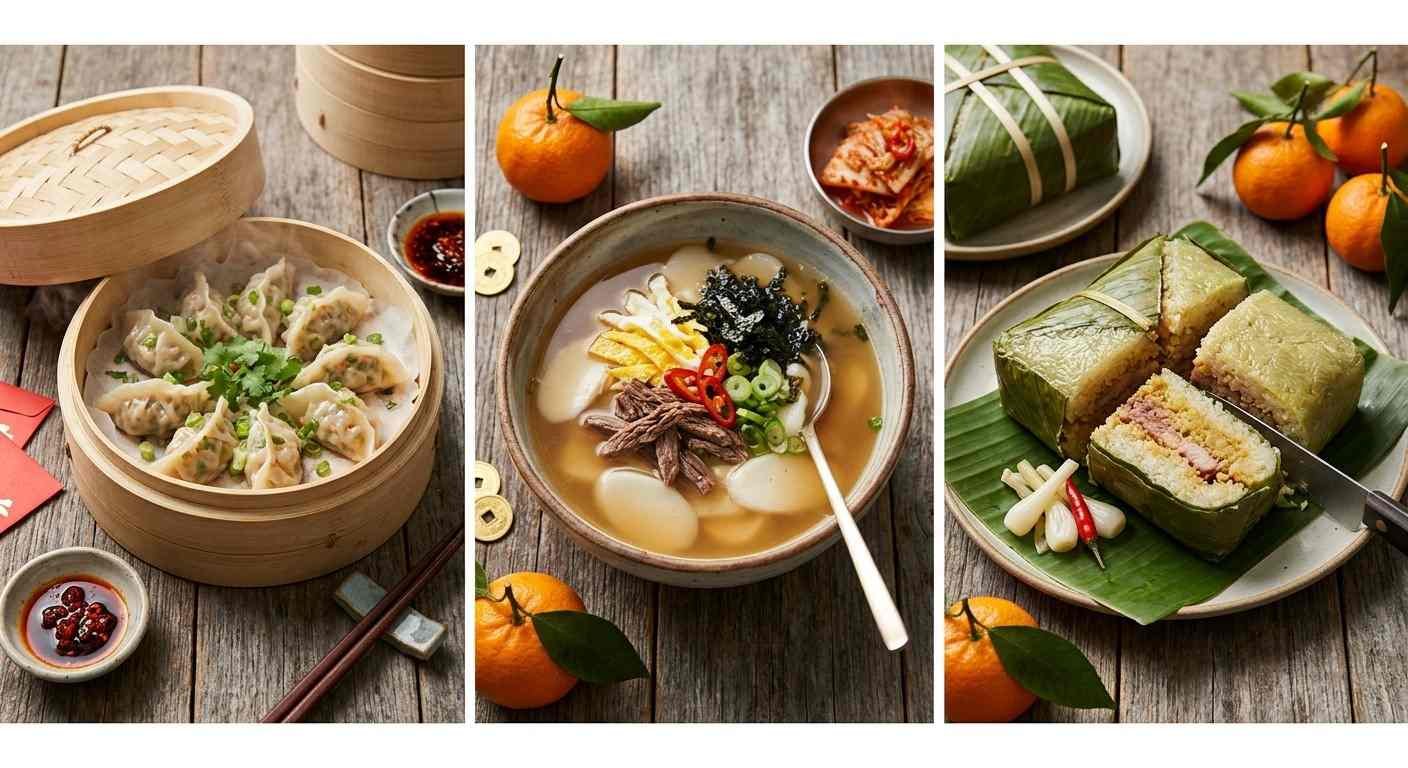
Shaped like ancient gold ingots, dumplings symbolize wealth. They are especially common in northern China, where families often fold them together at midnight. Some households hide a coin in one dumpling for the luckiest eater.
2. Whole fish
The word for fish sounds like the word for “surplus,” so a whole fish represents abundance that carries into the new year. Many families deliberately leave a little uneaten.
3. Spring rolls
Golden and crisp, spring rolls resemble gold bars. They are traditionally linked to the arrival of spring, which gives the festival its Chinese name, the Spring Festival.
4. Longevity noodles
Long, uncut noodles stand for a long life. Tradition says not to bite them in half, so slurp carefully.
5. Nian gao (sticky rice cake)
Nian gao sounds like “higher year,” a wish for growth and promotion. It can be steamed, sliced and pan-fried, or served sweet.
6. Tangyuan (sweet rice balls)
These soft, round dumplings in sweet soup are most associated with the Lantern Festival that ends the celebration. Their shape signals family togetherness.
7. Tangerines and oranges
In Cantonese, the words for tangerine and orange sound like “luck” and “gold.” Guests often exchange them as gifts, which is why lunar new year food gifts frequently include citrus, candies and snack boxes.
8. Buddha’s delight (jai)
This vegetarian stew of mushrooms, bean curd and vegetables is eaten by many families on the first day, with ingredients chosen for their lucky names.
Korean Lunar New Year Food (Seollal)
Koreans celebrate Seollal with ancestral rites and a table built around one iconic dish.
9. Tteokguk (rice cake soup)
Thin white rice cake slices in a clear beef or anchovy broth represent a fresh, clean start. Traditionally, eating a bowl means you become one year older. Toppings usually include egg strips, seaweed and scallions.
Other Seollal favorites
- Mandu: Korean dumplings, often added to tteokguk.
- Jeon: pan-fried savory pancakes made with fish, meat or vegetables.
- Japchae: glass noodles stir-fried with vegetables.
- Yakgwa and sikhye: a honey cookie and a sweet rice drink for dessert.
If you are searching for Korean lunar new year food ideas for a small gathering, tteokguk with a few jeon is an easy, authentic menu.
Vietnamese Lunar New Year Food (Tết)
Tết is Vietnam’s biggest holiday, and its table reflects regional traditions from north to south.
10. Bánh chưng and bánh tét
Bánh chưng is a square sticky rice cake filled with mung bean and pork, wrapped in leaves and boiled for many hours. It is popular in the north. Bánh tét is a cylinder version common in the south. Families often gather around the pot overnight while it cooks.
11. Thịt kho trứng (braised pork and eggs)
Pork and eggs simmered in coconut water and fish sauce make a comforting southern staple that keeps well for several days.
Other traditional Vietnamese Tết dishes
- Canh khổ qua: bitter melon soup, eaten to “leave hardship behind.”
- Giò lụa: Vietnamese pork sausage, sliced cold.
- Dưa hành: pickled scallion heads that balance rich dishes.
- Mứt: candied fruits and seeds served with tea to guests.
Comparison: Chinese vs. Korean vs. Vietnamese Lunar New Year Food
| Tradition | Signature Dish | Symbolism | Best For |
|---|---|---|---|
| Chinese | Dumplings, whole fish, nian gao | Wealth, surplus, progress | Large shared banquets |
| Korean | Tteokguk | New beginnings, aging one year | Simple, warm family meals |
| Vietnamese | Bánh chưng / bánh tét | Earth, gratitude, family unity | Make-ahead, multi-day feasts |
Lucky food meanings quick reference
| Food | Meaning | Difficulty |
|---|---|---|
| Dumplings | Wealth | Medium |
| Fish | Surplus | Easy |
| Long noodles | Long life | Easy |
| Nian gao | Growth, rising fortune | Easy |
| Tangerines | Luck, gold | Very easy |
| Bánh chưng | Gratitude, unity | Advanced |
Disneyland Lunar New Year Food
If you prefer to celebrate with a day out, Disney California Adventure has hosted a Lunar New Year festival in past years. Visitors searching for Disneyland lunar new year food usually find limited-time snacks and festive treats from specialty carts and marketplace stalls.
Frequently Asked Questions
What foods are eaten during Lunar New Year?
Common choices are dumplings, whole fish, spring rolls, long noodles, sticky rice cakes, sweet rice balls and tangerines. Korean families eat tteokguk, and Vietnamese families eat bánh chưng or bánh tét.
What is the most lucky food for Lunar New Year?
There is no single answer. Dumplings (wealth), fish (surplus) and noodles (long life) are among the most widely cited lucky foods.
What do you eat on Lunar New Year’s Eve?
Families share a reunion dinner. Typical dishes include fish, dumplings, noodles, braised meats and vegetables, though menus differ by region.
What foods should you avoid at Lunar New Year?
Many families avoid cutting noodles, serving broken or incomplete dishes, and in some traditions, eating porridge on the first day, which is linked to poverty.
What are good lunar new year food gifts?
Popular gifts include mandarin oranges, candied fruit, nian gao, nuts, tea, cookies and snack boxes, often in red or gold packaging.
Conclusion
Lunar new year food connects families to history and hope. Chinese dumplings and fish, Korean tteokguk and Vietnamese bánh chưng all share the same purpose: to start the year with luck, gratitude and good company.
Pick a few dishes that mean something to your family, explain their stories at the table, and cook ahead so you can enjoy the day. Happy Lunar New Year!
About the Author
Muhammad Naseem is an SEO specialist and digital marketer who works with AI-assisted content strategy, keyword research and helpful, people-first publishing. He creates practical guides designed to be accurate, easy to read and useful to searchers.
Last Updated: October 30, 2026