Italian Food: Classic Dishes, Regional Styles and How to Find the Best

Italian food is one of the most loved cuisines on earth, and for good reason. It takes a few honest ingredients, such as ripe tomatoes, good olive oil, fresh pasta and aged cheese, and turns them into meals that feel both comfortable and special. Whether you are craving a bubbling lasagna tonight or planning a first trip to Rome, this guide covers what Italian food really is, what to order, and how to find a great place nearby.
What Is Italian Food?
Italy only became a unified country in 1861, and its food still reflects that history. Each of its 20 regions cooks differently, and even neighboring towns argue about the “right” way to make a sauce. That is why there is no single Italian food. There are dozens of local cuisines sharing one philosophy: respect the ingredient and do not overcomplicate it.
Many people are surprised to learn that a classic Italian meal is not served all at once. It follows a rhythm, which makes the menu easier to navigate once you know it.
The Structure of an Italian Meal and Menu
A traditional Italian food menu is divided into courses. You are not expected to order every one.
- Antipasti: starters like bruschetta, prosciutto with melon, olives and burrata.
- Primi: the first course, usually pasta, risotto or soup.
- Secondi: the main course of meat or fish, such as osso buco or grilled sea bass.
- Contorni: side dishes, often roasted or sauteed vegetables.
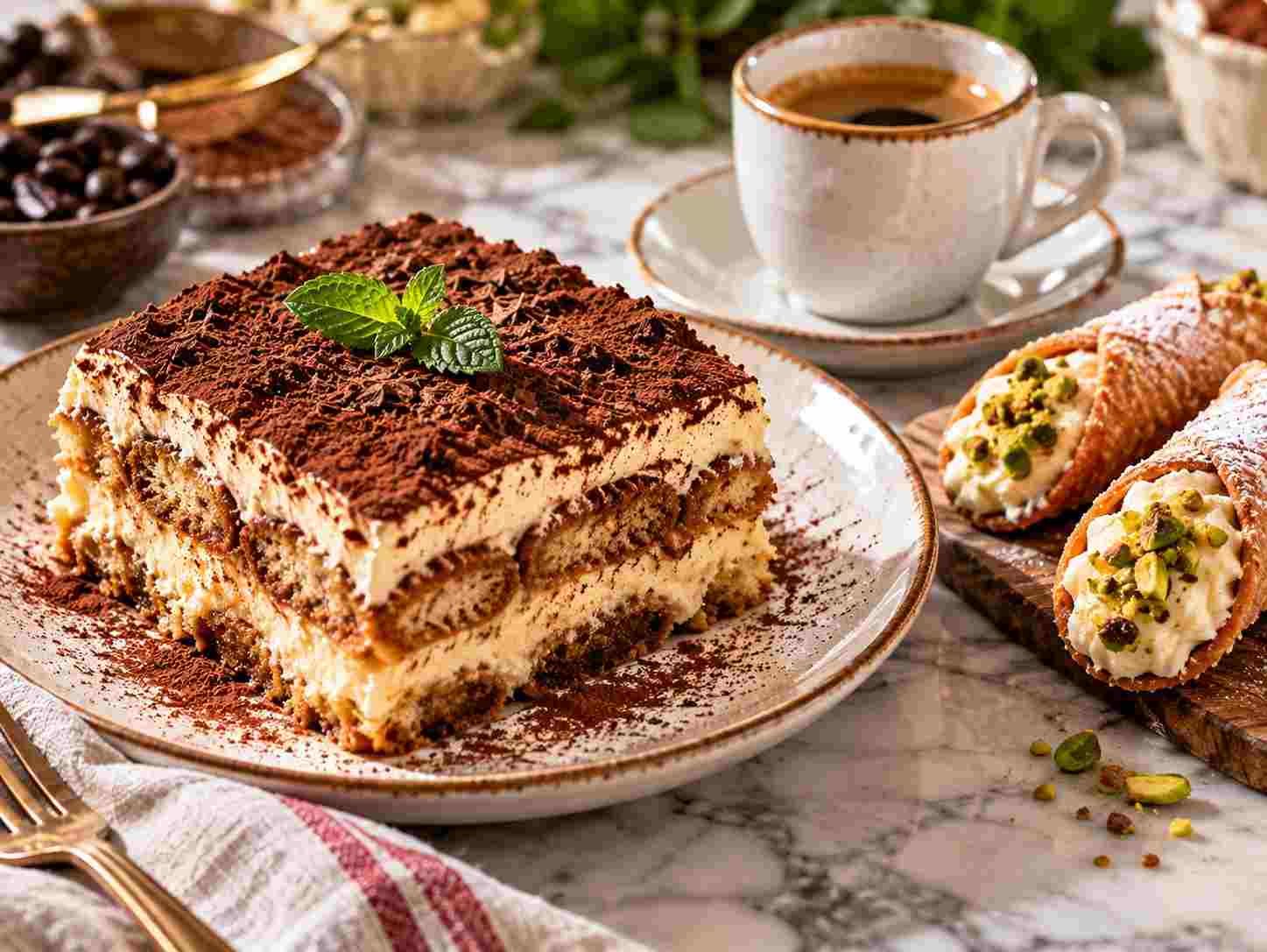
- Dolci: desserts like tiramisu, panna cotta, cannoli and gelato.
Regional Italian Food: North, Central and South
Understanding regions is the fastest way to understand Italian food. Climate and geography decide what grows, and what grows decides what ends up on the plate.
| Region | Signature Style | Classic Dishes |
|---|---|---|
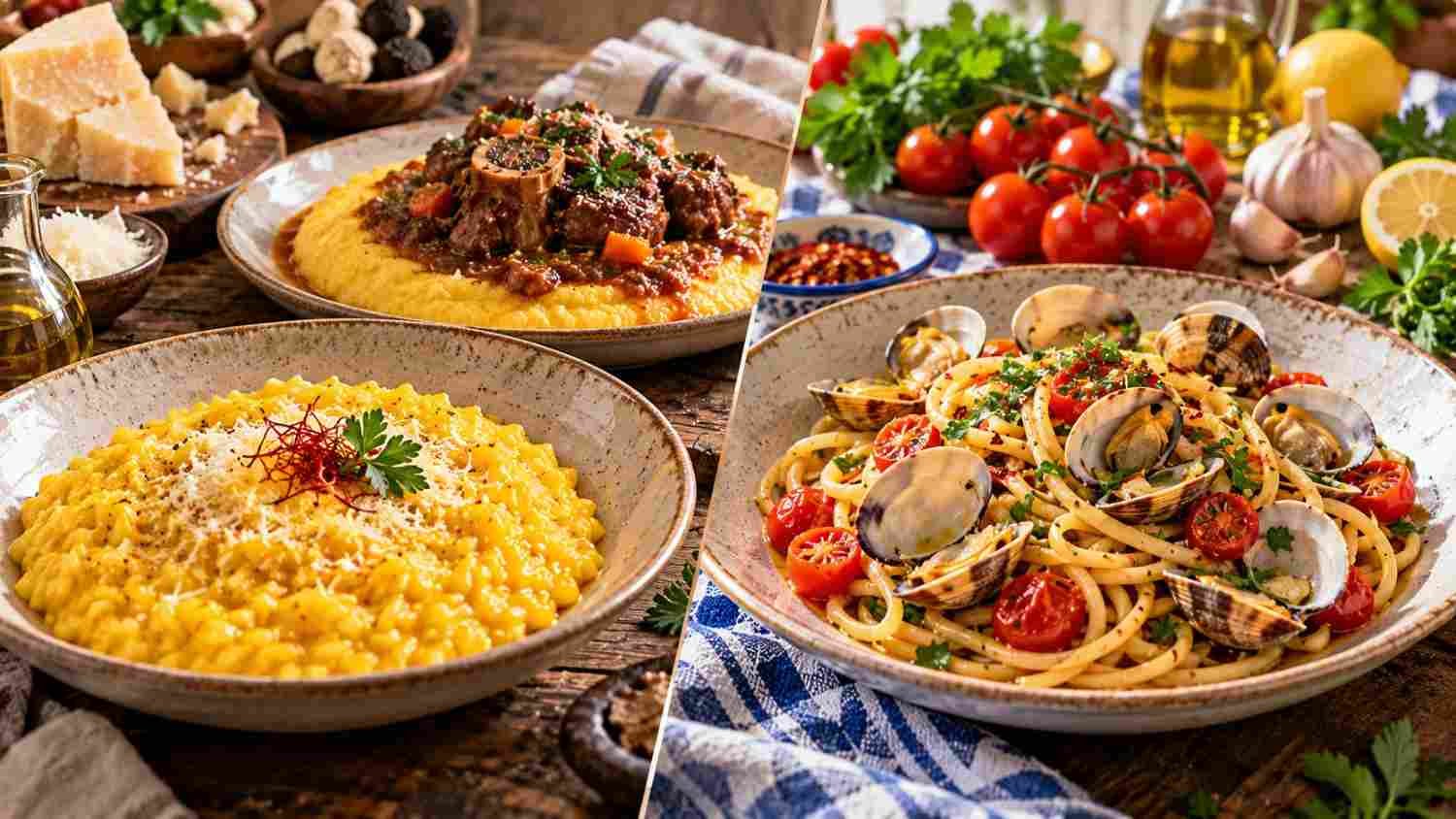
| Northern Italy | Butter, cream, rice, polenta, cooler-climate meats | Risotto alla Milanese, polenta, ossobuco, tortellini |
| Central Italy | Olive oil, legumes, pecorino, simple rustic cooking | Carbonara, cacio e pepe, supplì, bistecca alla Fiorentina |
| Southern Italy | Tomatoes, seafood, olive oil, chili, dried pasta | Neapolitan pizza, spaghetti alle vongole, eggplant parmigiana |
| Sicily and Sardinia | Citrus, seafood, ricotta, North African and Spanish influence | Arancini, pasta alla Norma, cannoli, cassata |
Northern Italian Food
Northern Italian food leans on rice, butter and slow braises, because the cooler climate suits cattle and rice paddies better than olive groves. Think creamy risotto and filled fresh pasta from Emilia-Romagna.
Southern Italian Food
Down south, sun-ripened tomatoes, garlic, olive oil and seafood take over. This is also the home of pizza. In 2017, UNESCO recognized the art of the Neapolitan pizzaiuolo (pizza maker) as intangible cultural heritage.
Traditional Italian Food Names You Should Know
Menus can look intimidating. Here is a simple Italian food list of traditional dishes worth recognizing.
| Dish | What It Is | Origin |
|---|---|---|
| Pizza Margherita | Tomato, mozzarella and basil on thin, blistered dough | Naples |
| Lasagna | Layers of pasta, ragù and béchamel or ricotta | Emilia-Romagna |
| Carbonara | Pasta with egg, pecorino, guanciale and black pepper (no cream) | Rome |
| Risotto | Slow-stirred rice cooked in broth | Lombardy and Veneto |
| Osso Buco | Braised veal shank with gremolata | Milan |
| Gnocchi | Soft potato dumplings with sauce | Across Italy |
| Tiramisu | Espresso-soaked ladyfingers with mascarpone | Veneto |
| Arancini | Fried rice balls with a filling | Sicily |
There are also hundreds of pasta shapes, each paired with a sauce for a reason. Thin strands such as spaghetti suit oil-based and seafood sauces, while tubes like rigatoni catch chunky ragù in their ridges.
How to Spot Authentic Italian Food
People search for authentic Italian food constantly, and it helps to know what to look for. Here are signs that a kitchen cares about the real thing:
- A focused menu. A short list of dishes usually means fresher cooking than a menu with 80 items.
- Fresh pasta made in-house, and sauces that coat the pasta rather than drown it.
- Regional specificity, for example “Roman” or “Sicilian” on the menu rather than generic labels.
- Real ingredients. Look for guanciale in carbonara, San Marzano-style tomatoes, and Parmigiano Reggiano, which is protected by a PDO designation in Europe.
- Simple wine and olive oil lists that favor Italian producers.
Italian vs. Italian-American Food
| Feature | Authentic Italian | Italian-American |
|---|---|---|
| Portions | Smaller, multi-course | Large, single plate |
| Sauce | Light, lets pasta shine | Heavier, more sauce and cheese |
| Signature dishes | Cacio e pepe, risotto, ossobuco | Chicken parmesan, spaghetti and meatballs, fettuccine Alfredo |
| Garlic | Used with restraint | Often prominent |
Both styles have a place. Italian-American cooking was created by immigrants who adapted old recipes to new ingredients, and it has become a beloved cuisine of its own.
Italian Food Near Me: How to Find the Best Spot
“Italian food near me” is one of the most searched food phrases, and the results can be overwhelming. A smarter approach saves time and disappointment.
Step-by-Step Checklist
- Check reviews from the last three months, not just the star rating.
- Look at customer photos of real plates, especially pasta and pizza.
- Read the menu online and look for fresh, seasonal specials.
- Confirm opening hours, since many Italian restaurants close between lunch and dinner. A quick look at our open restaurant finder can help you confirm what is open now.
- Ask staff what is made in-house that day.
Italian Food in Popular US Cities
Dining scenes vary by city. Las Vegas offers upscale and celebrity-chef Italian, San Diego has coastal seafood-leaning menus, Portland loves small seasonal trattorias, and San Antonio blends Italian cooking with Tex-Mex influence. Search each city name with “Italian food” and compare neighborhoods before choosing.
Italian Food Delivery, Catering and Food Trucks
- Delivery: Order pasta with sauce packed separately and bake pizza or lasagna for two minutes at home to restore texture.
- Catering: Baked pastas such as lasagna and ziti hold heat well for events. Plan roughly 4 to 6 ounces of cooked pasta per guest as a side and more for a main.
- Food trucks: Great for wood-fired pizza, arancini and cannoli at festivals. Check the truck’s social page for daily locations.
Is Italian Food Healthy?
It can be. Traditional Italian eating is closely tied to the Mediterranean diet, which emphasizes vegetables, legumes, olive oil, fish and whole grains. The trouble usually comes from oversized portions, heavy cream sauces and lots of fried appetizers.
- Choose tomato- or olive-oil-based sauces more often than cream-based ones.
- Start with a salad or vegetable antipasto.
- Share dessert, or pick fruit or sorbetto.
- Try grilled fish or chicken as your secondo.
Anyone managing a medical condition or food allergy should check ingredients with the restaurant, since cheese, gluten and nuts appear in many dishes.
Easy Italian Food Recipes to Try at Home
You do not need a professional kitchen. Three beginner-friendly Italian food recipes are good places to start:
- Aglio e olio: spaghetti, garlic, olive oil, chili flakes and parsley. Ready in 15 minutes.
- Caprese salad: ripe tomato, fresh mozzarella, basil and olive oil.
- Simple marinara: canned whole tomatoes, garlic, olive oil and basil, simmered about 20 minutes.
Explore More Food Guides
If you enjoy exploring cuisines, browse more on our food blog. You might like our guide to soul food for another comfort-driven cuisine, or the True Food Kitchen guide if you prefer lighter, health-focused menus. For hours and restaurant info, head to the FastFoodOpen homepage.
Italian Food FAQs
What is Italian food known for?
Italian food is known for simple, high-quality ingredients, regional variety, fresh pasta, pizza, olive oil, cheese and slow-cooked sauces.
What is the most popular Italian food?
Pizza and pasta lead worldwide. Lasagna, risotto and tiramisu are also favorites.
How can I find the best Italian food near me?
Search “Italian food near me,” compare recent reviews, look for a focused menu with fresh pasta, and check photos of actual dishes before ordering.
What is the difference between Italian and Italian-American food?
Authentic Italian food is regional, lighter and served in courses. Italian-American food has larger portions, heavier sauces and dishes like chicken parmesan.
Is Italian food healthy?
It can be, especially when built around vegetables, olive oil, legumes and fish with moderate pasta portions.
Conclusion
Italian food is far more than pasta and pizza. It is a collection of regional cuisines united by fresh ingredients, patience and pride. Learn the courses, know the regional differences, and watch for authentic signs, and you will order with confidence anywhere, from a neighborhood trattoria to an Italian food truck.
Ready to eat? Use these tips to find the best Italian food near you, and explore more guides on the FastFoodOpen blog.