Mall Food Court: The Complete Guide to Dining, Saving Money and Top US Food Courts
Last Updated: October 30, 2026 | By Muhammad Naseem
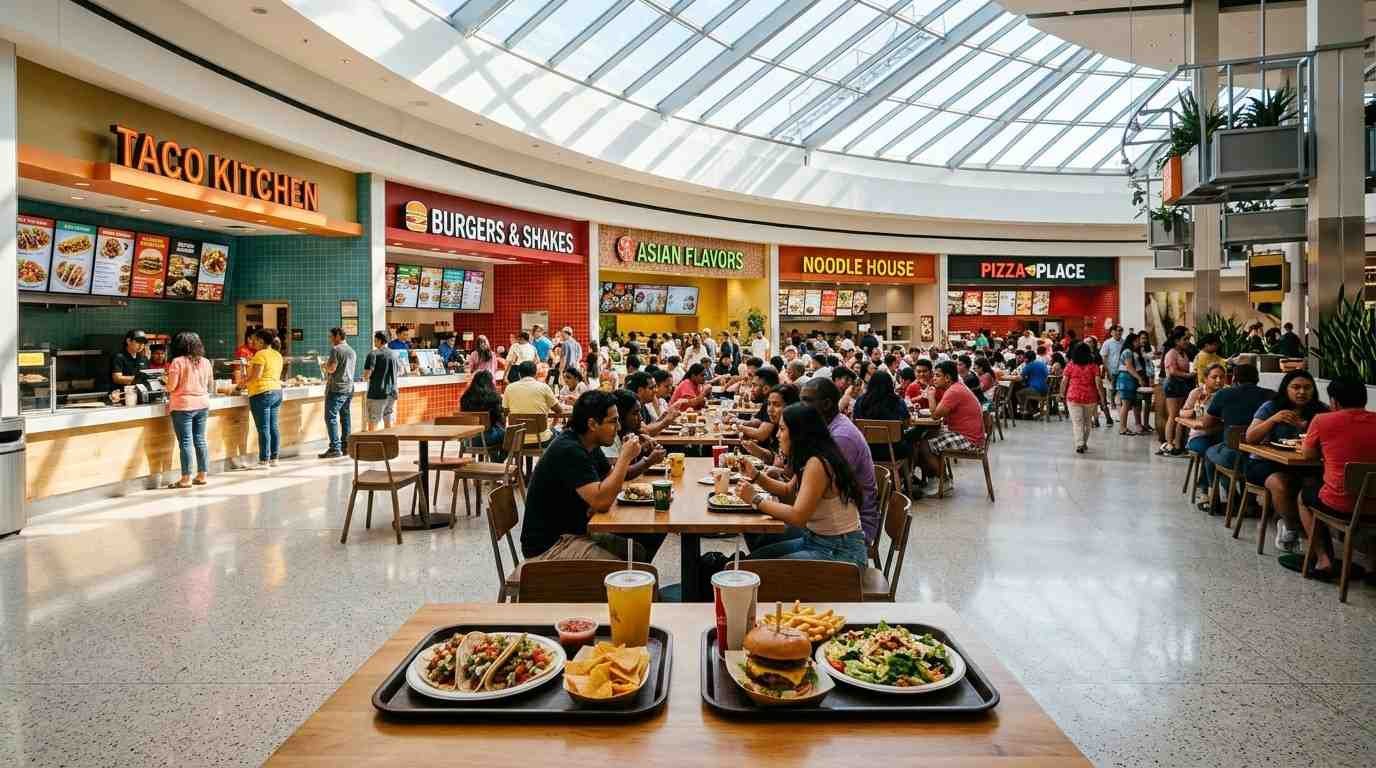
A mall food court is one of the easiest ways to feed a hungry group. Everyone picks their own meal, the prices stay reasonable, and nobody waits for a table to open up. It is also a favorite stop for shoppers, students, office workers on lunch break, and families with picky eaters.
Search interest backs this up. People regularly look for the food court at specific places such as American Dream, Lenox Square, King of Prussia, Brea Mall and Pentagon City, usually to check what is inside before they go. This guide answers those questions in one place: how a mall food court works, what it typically serves, how hours and prices compare, and how to get more for your money.
- A mall food court is a shared dining hall with many counter-service vendors.
- Most open around 10 AM and close between 8 PM and 9 PM, but hours vary by mall and holiday.
- Apps, combo meals and off-peak visits are the easiest ways to save.
- Always confirm vendors and hours on the mall’s official website, because tenants change often.
What Is a Mall Food Court?
A mall food court is a communal dining area inside a shopping mall where multiple restaurants and fast food vendors share one large seating space. Customers order at separate counters, carry their trays to any open table, and clear their own trash afterward.
The modern food court grew alongside the American shopping mall in the 1970s. Malls wanted shoppers to stay longer, and shoppers wanted quick, affordable meals without leaving the building. A shared seating hall solved both problems. It lowered costs for tenants and gave visitors variety in a single stop.
Key Features of a Typical Food Court
- Multiple vendors: usually somewhere between 6 and 20 counters, depending on mall size.
- Shared seating: open tables and chairs, often with high chairs for toddlers.
- Counter service: order, pay and pick up at the same window.
- Central location: often on an upper level, near the middle of the mall, or next to an anchor store.
How a Mall Food Court Works
First-time visitors sometimes feel lost, but the system is simple once explained.
Step-by-Step: Your First Visit
- Walk the full circle. Check every menu and the daily specials before you commit.
- Grab a table first if you are in a group. One person can hold seats while others order.
- Order at the counter. Some vendors give you a buzzer or number, others hand over the food right away.
- Return your tray. Most malls expect guests to clear their own trash.
Why Malls Rely on Food Courts
For mall operators, a food court is a traffic driver. Visitors who stop for a meal tend to shop longer, which helps nearby stores. For vendors, a smaller counter-style footprint keeps rent and staffing manageable. That mutual benefit is why food courts remain common even as shopping habits change.
Typical Hours and Best Times to Visit
Most mall food courts follow mall hours, though some vendors open earlier or close sooner. The table below shows common patterns. These are general ranges, not guarantees.
| Day | Common Hours | Notes |
|---|---|---|
| Monday – Saturday | 10 AM – 8 or 9 PM | Some vendors open at 9 AM or close earlier on slow days. |
| Sunday | 11 AM – 6 or 7 PM | Shorter hours are common. |
| Major holidays | Reduced hours or closed | Check the mall site before you drive. |
| Black Friday / holiday season | Extended hours | Expect larger crowds and limited seating. |
If you are hunting for a meal at an unusual hour, the guide on what fast food is open near me helps you find a backup when the mall has already closed.
What You Can Eat at a Mall Food Court
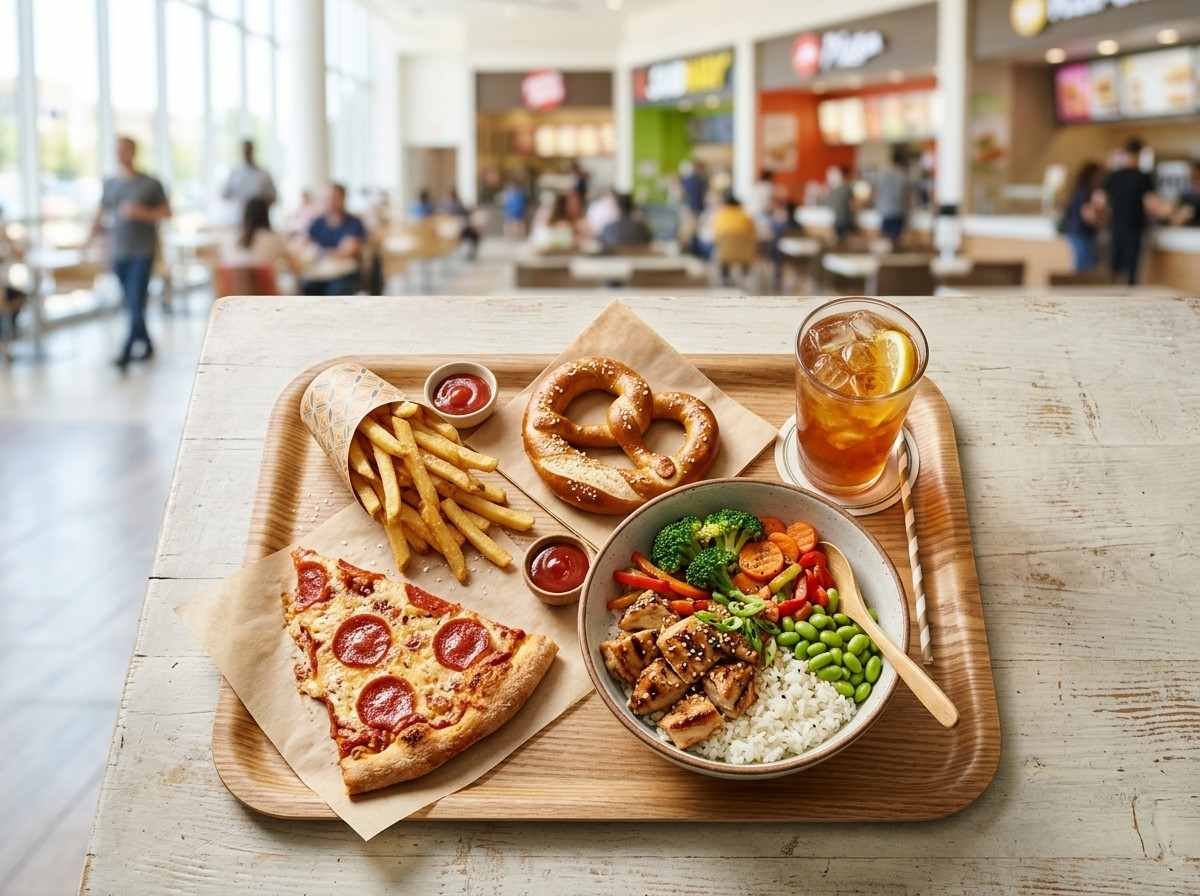
Variety is the main appeal. A single hall may offer burgers, noodles, pizza, salads and dessert, all within a few steps of each other.
| Category | Examples You Often See | Best For |
|---|---|---|
| American classics | Burgers, fries, chicken sandwiches | Kids and quick bites |
| Asian-American | Orange chicken, lo mein, teriyaki bowls | Generous portions |
| Italian | Pizza slices, pasta, breadsticks | Sharing |
| Mexican | Burritos, tacos, rice bowls | Customizable meals |
| Sandwiches and subs | Deli subs, wraps, soups | Lighter lunches |
| Snacks and sweets | Pretzels, smoothies, ice cream, cookies | Mid-shopping treats |
Well-known chains such as Panda Express, Sbarro, Chick-fil-A, Auntie Anne’s and Subway appear in many food courts, but the exact lineup depends on the mall. Local and regional vendors are also becoming more common.
Popular Mall Food Courts Across the US
Food court lineups change, so use this section as a starting point and confirm current tenants on each mall’s official website. The malls below are frequently searched by hungry visitors.
| Mall | Location | Good to Know |
|---|---|---|
| American Dream | East Rutherford, New Jersey | A massive retail and entertainment complex. Plan for a longer day and check dining zones before arriving. |
| Mall of America | Bloomington, Minnesota | One of the country’s best-known malls, with a large dining mix. |
| King of Prussia Mall | King of Prussia, Pennsylvania | Among the largest US malls by retail space. Dining is spread across several areas. |
| Lenox Square | Atlanta, Georgia | Popular upscale shopping stop with a mix of quick-service options. |
| Brea Mall | Brea, California | A busy Southern California mall with a standard food court layout. |
| Pentagon City | Arlington, Virginia | Handy for Metro riders. Weekday lunch is busy. |
| Dadeland Mall | Miami, Florida | A major South Florida shopping destination. |
| Burlington Mall | Burlington, Massachusetts | Large regional mall with a central food court. |
| Staten Island Mall | Staten Island, New York | Serves a wide local community and gets crowded on weekends. |
| Holyoke Mall | Holyoke, Massachusetts | A big regional mall, popular for day trips. |
| Haywood Mall | Greenville, South Carolina | Main shopping hub for the Upstate area. |
How to Pick the Right Mall for a Meal
- Check the dining directory on the mall’s website for current vendors.
- Look at recent reviews on Google Maps for cleanliness and seating comments.
- Plan parking near the entrance closest to the food court.
- Confirm holiday hours if your visit falls near a public holiday.
Mall Food Court vs. Sit-Down Restaurant
Should you eat in the food court or sit down somewhere else in the mall? Here is a fair side-by-side comparison.
| Factor | Mall Food Court | Sit-Down Restaurant |
|---|---|---|
| Speed | Fast, usually under 10 minutes | Slower, 30 to 60 minutes |
| Cost | Generally lower, no table service tip in most cases | Higher, plus tip |
| Variety for groups | Excellent, everyone chooses separately | Limited to one menu |
| Atmosphere | Busy and casual | Calmer and more private |
| Best for | Quick meals, families, students | Celebrations and relaxed conversation |
Big group, different tastes, short on time? The food court wins. Planning a celebration or a long conversation? A sit-down restaurant is usually the better fit. For larger events where everyone needs the same menu, fast food catering can be a smoother option than coordinating a crowd at counters.
How to Save Money at a Mall Food Court
Food court meals are already affordable, but small habits make them cheaper still.
- Download vendor apps. Many chains offer coupons, loyalty points and first-order deals.
- Choose combo meals. Bundles typically cost less than ordering items one by one.
- Share large portions. Many Asian-American and Italian counters serve generous plates that two people can split.
- Ask for free samples. Several vendors hand out samples, which helps you pick before you pay.
- Skip bottled drinks. Free water cups are often available, or you can bring a reusable bottle.
- Check mall promotions. Some malls run seasonal dining offers through their websites or apps.
Dietary Needs and Allergies in a Food Court
Shared kitchens and shared seating mean extra care for people with food allergies or special diets.
Allergy Safety Tips
- Tell the staff about your allergy before ordering, not after.
- Ask whether ingredients are cooked on shared surfaces or in shared oil.
- Look for allergen information on vendor websites before your visit.
- If a vendor cannot answer confidently, choose another counter.
Vegetarian, Vegan and Religious Dietary Needs
Salad bars, bean burritos, veggie subs and cheese pizza are widely available. For halal, kosher or other religious requirements, do not assume. Ask staff directly about sourcing and preparation, and confirm with the vendor if the answer is unclear.
Trends Shaping the Modern Mall Food Court
The classic food court is evolving. Here are the changes visitors are most likely to notice.
Mobile Ordering and Pickup Lockers
Many brands now let customers order from a phone and collect food without standing in line. This is especially helpful during lunch rushes.
Food Halls and Local Vendors
Some malls replace traditional chains with food hall style layouts featuring local chefs and regional concepts. These spaces often add bars, communal tables and more design-focused seating.
Entertainment and Dining Combined
Large destinations such as American Dream blend dining with attractions, so a meal becomes part of a full-day outing rather than a quick stop.
Food Trucks and Pop-Ups
Mall parking lots and seasonal events increasingly host food trucks. Entrepreneurs curious about that route can explore food trucks for sale near me to understand the options.
Game Day and Group Outings
Food courts also make an easy pre-game stop. If you are planning snacks for a big match, these football food ideas pair well with a quick mall meal.
Practical Tips for a Better Food Court Visit
- Arrive early or late to dodge the lunch rush.
- Send one person to hold a table before the group splits to order.
- Bring wet wipes when visiting with young children.
- Keep valuables close and never leave bags unattended on seats.
- Check the mall app or site for current vendors and hours.
- Carry a small trash-ready bag for stroller snacks and wrappers.
Looking for more guides like this? Visit the Fast Food Open blog or the Fast Food Open homepage for more dining resources.
Frequently Asked Questions About the Mall Food Court
What is a mall food court?
A mall food court is a shared dining area inside a shopping mall where several independent restaurants and fast food brands sit around a common seating space. Customers order at individual counters and eat at shared tables.
What time does a mall food court open and close?
Most open with the mall, usually around 10 AM, and close between 8 PM and 9 PM. Individual restaurants may open earlier or close sooner, and holiday hours often differ, so check the mall’s official website.
Is a mall food court cheaper than a restaurant?
Usually yes. Counter service, no tipping in most cases and combo meals keep the total lower than a sit-down restaurant, although prices vary by mall and vendor.
Can you bring outside food into a mall food court?
Most malls ask visitors to buy from the food court vendors if they use the seating area. Policies differ, so look for posted signs or ask mall guest services.
How do I find the food court in a mall?
Check the directory map at the entrance or the mall’s website or app. Food courts are commonly on the upper level, near the center of the mall, or beside a major anchor store.
Conclusion: Is a Mall Food Court Worth It?
For most visitors, yes. A mall food court delivers speed, variety and fair prices in one convenient location. It suits families, students, solo shoppers and groups who cannot agree on a single cuisine.
To get the best experience, check hours and current vendors on the mall’s official website, visit just before or after the rush, use vendor apps for deals, and speak up about allergies. Whether you are heading to American Dream, King of Prussia, Lenox Square or your local mall, a little planning turns a quick bite into an easy, enjoyable stop.
Want more dining guides? Explore the Fast Food Open blog for fresh articles.