Food to Eat After Tooth Extraction: What’s Safe, What to Skip & When
A day-by-day guide to soft, cold and easy foods that protect the blood clot and speed up healing.

Pulling a tooth takes minutes. Healing takes days, and what lands on the plate during those days matters more than most people expect. The right food to eat after tooth extraction keeps the blood clot in place, limits pain and swelling, and supplies the protein and calories the body needs to rebuild tissue.
The wrong choices, such as a handful of chips or a hot, spicy bowl of curry, can irritate the socket or even dislodge the clot. That setback is called dry socket, and it is the main reason dentists are so strict about diet.
This guide covers exactly what to eat, when to eat it, what to avoid, and how to cope with special situations like wisdom teeth, bone grafts and busy days when fast food is the only option.
Stick to soft, smooth, lukewarm or cold foods that need little or no chewing:
- First 24 hours: yogurt, applesauce, pudding, ice cream (with a spoon), lukewarm broth, smoothies without a straw.
- Days 2 to 3: scrambled eggs, mashed potatoes, oatmeal, mashed banana, cottage cheese, well-cooked soft pasta.
- Days 4 to 7: soft fish, shredded chicken, rice, soft bread without crust, steamed vegetables.
- Avoid: crunchy, sticky, spicy, very hot or seedy foods, alcohol, and drinking through a straw.
Why Diet Matters After an Extraction
Right after a tooth comes out, the empty socket fills with a blood clot. That clot works like a natural bandage. It protects the bone and nerve endings underneath and gives new tissue a place to grow.
Dry socket (alveolar osteitis) happens when that clot breaks loose or dissolves too early. It is estimated to affect roughly 2% to 5% of extractions, and the rate is noticeably higher after impacted lower wisdom tooth removal. The pain is deep, throbbing and often spreads toward the ear.
What the Body Needs During Healing
- Protein for tissue repair (eggs, yogurt, soft fish, protein shakes eaten with a spoon).
- Vitamin C and zinc to support gum healing (mashed fruit, blended soups, fortified oatmeal).
- Fluids to prevent dehydration, which can slow recovery.
- Enough calories, because skipping meals leaves the body short on healing fuel.
Every mouth is different. A simple extraction of a front tooth heals faster than a surgical removal of an impacted wisdom tooth. The written instructions from the dentist or oral surgeon always override general advice, including this article.
Healing Timeline: What to Eat and When
Most dental offices follow a similar progression. The table below shows the typical pattern for a routine extraction.
| Stage | Best Foods | Texture & Temperature |
|---|---|---|
| First 24 hours | Yogurt, applesauce, pudding, ice cream, gelatin, broth, smoothies (spoon only) | Liquid or puree; cool or lukewarm |
| Days 2 to 3 | Scrambled eggs, mashed potatoes, oatmeal, cottage cheese, mashed avocado, soft tofu | Soft, no chewing; lukewarm |
| Days 4 to 7 | Flaky fish, shredded chicken, soft rice, pasta, soft bread without crust, steamed vegetables | Tender, minimal chewing on the opposite side |
| Week 2 and beyond | Gradual return to regular meals | Normal textures once the dentist confirms healing |
The First 24 Hours
This is the most delicate window. The clot is fresh and the area may still be numb, so biting the cheek or tongue by accident is common. Cool, smooth foods are ideal. Hot drinks and soups should cool to lukewarm before they are sipped or spooned.
Days 2 to 3
Swelling usually peaks around day two or three. Soft, protein-rich meals help here. Scrambled eggs, mashed sweet potato and oatmeal give real nutrition without effort.
Days 4 to 7 and Beyond
As tenderness fades, softer solids can return. The golden rule is to test small bites, chew away from the extraction site, and stop at the first sign of pain.
Soft Food to Eat After Tooth Extraction
Soft food is the foundation of recovery. The best options are filling, nutritious and gentle on the socket.
Protein-Rich Soft Foods
- Scrambled or soft-boiled eggs
- Greek yogurt and cottage cheese
- Soft tofu
- Flaky baked fish such as cod or salmon
- Hummus and refried beans (smooth, not chunky)
- Protein shakes, eaten with a spoon or sipped carefully per the dentist’s advice
Fruits and Vegetables
- Applesauce and mashed bananas
- Mashed avocado
- Blended vegetable soups (lukewarm)
- Mashed or pureed carrots, peas and sweet potatoes
- Smoothies made without seeds (strawberries and raspberries can leave seeds in the socket)
Grains and Starches
- Oatmeal and cream of wheat
- Mashed potatoes
- Soft, well-cooked pasta and noodles
- Rice that is soft and moist, introduced after the first couple of days because grains can lodge in the socket
Blend a batch of soup or mashed potatoes before the appointment and freeze it in single portions. Having food ready removes the temptation to grab something crunchy when pain and fatigue set in.
Cold Food to Eat After Tooth Extraction
Cold foods deserve their own category. Cool temperatures help calm swelling and numb the area, which is why many oral surgeons recommend them for the first day.
Best Cold Options
- Plain ice cream or frozen yogurt (no nuts, chocolate chips or cookie chunks)
- Chilled yogurt and pudding
- Gelatin and sugar-free popsicles (not bitten, just licked)
- Cold applesauce
- Chilled smoothies eaten with a spoon
- Cold cottage cheese
A Note on Extremes
Cold should mean cool, not painfully icy. Very cold foods can trigger sensitivity in neighboring teeth, especially if the gums are sore. Hot foods are the opposite problem. Heat can increase bleeding and swelling during the first 24 hours, so soups and coffee should be lukewarm at most.
Best Soft Foods Compared
| Food | Why It Works | Prep Tip | Earliest Timing |
|---|---|---|---|
| Greek yogurt | High protein, cool, no chewing | Choose plain, no fruit chunks | Day 1 |
| Scrambled eggs | Protein and vitamins, very soft | Cook until just set, serve lukewarm | Day 2 |
| Mashed potatoes | Filling, comforting, easy to swallow | Keep smooth, no skins | Day 1 to 2 |
| Applesauce | Gentle fruit option, vitamin C | Unsweetened where possible | Day 1 |
| Oatmeal | Fiber and energy | Cook until creamy, cool slightly | Day 2 |
| Bone broth | Hydration and minerals | Sip lukewarm, not hot | Day 1 |
| Soft fish | Lean protein, flakes easily | Bake or steam, remove bones | Day 3 to 4 |
| Smoothies | Easy nutrition | No seeds, use a spoon not a straw | Day 1 |
Foods to Avoid After Tooth Extraction
Knowing what to skip is as important as knowing what to eat. Certain foods can break open the clot, get trapped in the socket, or irritate healing tissue.
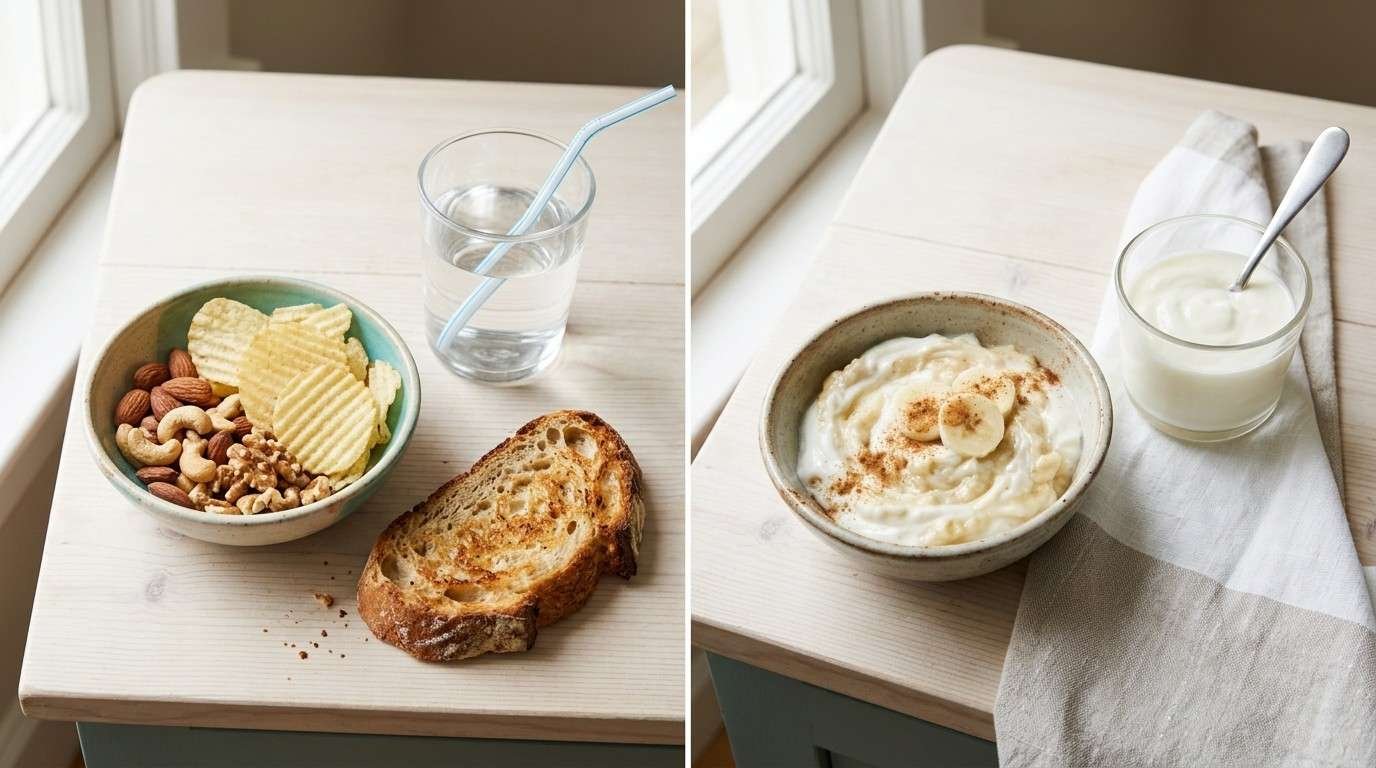
Safe Choices
- Smooth, creamy textures
- Lukewarm or cool temperatures
- Mild flavors
- Foods eaten with a spoon
Foods to Skip
- Chips, nuts, popcorn, crackers
- Hard bread crusts and pizza edges
- Rice and seeds that scatter (early on)
- Spicy sauces and curries
- Alcohol and hot coffee
| Avoid | Reason |
|---|---|
| Crunchy and hard foods (chips, nuts, granola) | Sharp pieces can cut the gum or lodge in the socket |
| Sticky or chewy foods (caramel, gum, taffy) | They can pull at the clot and stitches |
| Spicy foods | Capsaicin and acids irritate the open wound |
| Very hot foods and drinks | Heat increases bleeding and swelling in the first 24 hours |
| Straws | Suction can dislodge the blood clot |
| Alcohol and smoking or vaping | Both slow healing and raise dry socket risk |
| Small seeds (strawberry, sesame, poppy) | They can settle into the socket and cause irritation |
The suction created by straws and cigarettes is one of the best-known triggers of dry socket. Most dental guidelines advise avoiding both for at least the first several days, and longer after surgical extractions.
Fast Food to Eat After Tooth Extraction
Recovery does not always happen at home with a blender. Sometimes the fridge is empty, the pharmacy run took all afternoon, and the only thing open is a drive-through. In that case, a few menu items are workable. It helps to check which restaurants are open before heading out; the what fast food is open near me guide lists current options, and the fast food near me current location page helps find the closest one.
Fast Food Items That Are Usually Fine
- Soft-serve ice cream or a plain milkshake (eaten with a spoon)
- Mashed potatoes and gravy (lukewarm)
- Oatmeal from a breakfast menu
- Scrambled eggs without sausage or hash browns
- Applesauce cups and yogurt parfaits (skip the granola)
- Mild soups and chili with soft beans, cooled first
- Soft tacos with refried beans and no crunchy shell; the Mexican fast food guide covers softer menu picks
Fast Food to Skip for Now
- French fries, onion rings and fried chicken
- Burgers on crusty buns and toasted sandwiches
- Pizza crust and breadsticks
- Spicy wings, hot sauces and salsa
- Fountain sodas through a straw
Ask for drinks without a straw and request items to be served lukewarm. Drive-through food often arrives scalding hot, so letting it cool for ten minutes avoids irritating the extraction site.
Anyone also following a special diet, such as celiac or gluten sensitivity, can browse gluten free fast food options to find soft, suitable choices.
Indian Food to Eat After Tooth Extraction
Many home-cooked South Asian dishes are naturally soft, which makes recovery easier, provided the spice level stays low. Heavy masala, chili and fried items are the problem, not the cuisine itself.
Gentle Indian Options
- Moong dal or masoor dal, thin and lukewarm, with very little chili
- Khichdi, a soft rice and lentil porridge that is filling and easy to digest
- Dahi (curd or yogurt) and plain lassi eaten with a spoon
- Mashed aloo (potato) without spices
- Kheer or sooji halwa, cooled and smooth, without nuts
- Vegetable or chicken soup, strained and lukewarm
Indian Foods to Avoid Early On
- Chaat, pakoras, samosas and anything fried or crunchy
- Hot, spicy curries and pickles
- Crusty rotis and naan edges
- Chai served piping hot
Food to Eat After Tooth Extraction and Bone Graft
A bone graft places material in the socket to preserve or rebuild the jawbone, often before a dental implant. Because the site is more delicate, the diet is usually stricter and lasts longer than after a simple extraction.
What Is Different With a Bone Graft
- Soft foods are often recommended for one to two weeks, sometimes longer.
- Foods with small grains or seeds (rice, quinoa, berries) are best avoided early, since particles can disturb the graft.
- Chewing should happen on the opposite side of the mouth.
- Sutures or a membrane may be in place, so sticky and chewy foods are a bigger risk.
Best Choices With a Bone Graft
- Smooth soups and broths
- Yogurt, pudding and custard
- Mashed potatoes, mashed cauliflower and pureed vegetables
- Soft scrambled eggs
- Protein smoothies eaten with a spoon
Graft procedures vary widely depending on the material used and the location. If the written instructions differ from this guide, the oral surgeon’s instructions are the ones to follow.
Safe Eating Tips for Faster Healing
- Wait for numbness to fade. Eating while numb makes it easy to bite the lip, cheek or tongue.
- Chew on the opposite side. This keeps food and pressure away from the socket.
- Take small bites and sips. Slow eating gives time to notice pain or bleeding.
- Use a spoon, not a straw. Suction is the enemy of the blood clot.
- Eat often. Five or six small meals are easier than three large ones.
- Stay hydrated. Water, diluted juice and broth all count.
- Rinse gently. After the first 24 hours, many dentists recommend a gentle warm salt-water rinse after meals. Vigorous swishing should be avoided.
- Take medication with food. Pain relievers on an empty stomach can cause nausea.
Sample 3-Day Meal Plan After Tooth Extraction
| Meal | Day 1 | Day 2 | Day 3 |
|---|---|---|---|
| Breakfast | Plain yogurt with mashed banana | Soft scrambled eggs | Creamy oatmeal with applesauce |
| Snack | Chilled pudding | Cottage cheese | Smoothie (no seeds), spoon only |
| Lunch | Lukewarm blended tomato soup | Mashed potatoes with soft tofu | Soft pasta with mild sauce |
| Snack | Applesauce | Mashed avocado | Ice cream or frozen yogurt |
| Dinner | Bone broth and mashed sweet potato | Moong dal or khichdi | Flaky baked fish with mashed carrots |
When to Call the Dentist
Some soreness, mild swelling and a little oozing are normal during the first few days. Certain symptoms, however, deserve a prompt call.
- Pain suddenly worsens around day three to five instead of improving
- An empty-looking socket or visible bone appears, along with a bad taste or smell
- Bleeding continues heavily after pressing gauze for 30 minutes
- Fever, increasing swelling or pus develops
- Swallowing or breathing becomes difficult (this needs emergency care)
Frequently Asked Questions
What is the best food to eat after tooth extraction?
The best food to eat after tooth extraction is soft, cool and easy to swallow without chewing: yogurt, applesauce, mashed potatoes, scrambled eggs, broth and oatmeal. These foods protect the blood clot while still supplying protein and calories for healing.
How long do you have to eat soft food after tooth extraction?
Most people stay on soft foods for about 3 to 7 days after a simple extraction. Wisdom tooth removal, surgical extractions and bone grafts can need one to two weeks. The dentist’s instructions always take priority.
Can you eat fast food after tooth extraction?
Yes, but only the soft, mild items: soft-serve ice cream, mashed potatoes, oatmeal, scrambled eggs, soups and applesauce. Fries, burgers, fried chicken and anything crunchy or spicy should wait until the site has healed.
Can you eat ice cream after tooth extraction?
Plain ice cream is generally fine, and the cold can calm swelling. It should be eaten with a spoon, and flavors with nuts, cookie chunks or hard candy should be skipped.
When can you eat normal food again after tooth extraction?
Normal textures can usually return after about one to two weeks, once the gum has closed over and chewing no longer hurts. Foods should be reintroduced gradually, starting with softer items and chewing on the opposite side.
Conclusion
The right food to eat after tooth extraction comes down to three principles: keep it soft, keep it cool or lukewarm, and keep it gentle on the socket. Yogurt, applesauce, mashed potatoes, eggs, oatmeal and broth carry most people through the first days, while crunchy, spicy, hot and sticky foods wait until healing is well underway.
Straws, smoking and alcohol are the hidden risks that can undo an otherwise perfect diet. Bone grafts and wisdom tooth surgery call for extra patience, and any worsening pain, fever or heavy bleeding deserves a call to the dental office.
With a little planning, recovery can be comfortable and well-nourished. And when cooking is not an option, a handful of mild fast food choices can fill the gap without risking the clot.
This article is for general information and is not a substitute for professional dental or medical advice. Always follow the aftercare instructions from the dentist or oral surgeon who performed the procedure. For authoritative background reading, see the American Dental Association’s MouthHealthy and the NHS health guidance.