Vegan Indian Food: The Complete Guide to Dishes, Ordering Tips & Easy Recipes
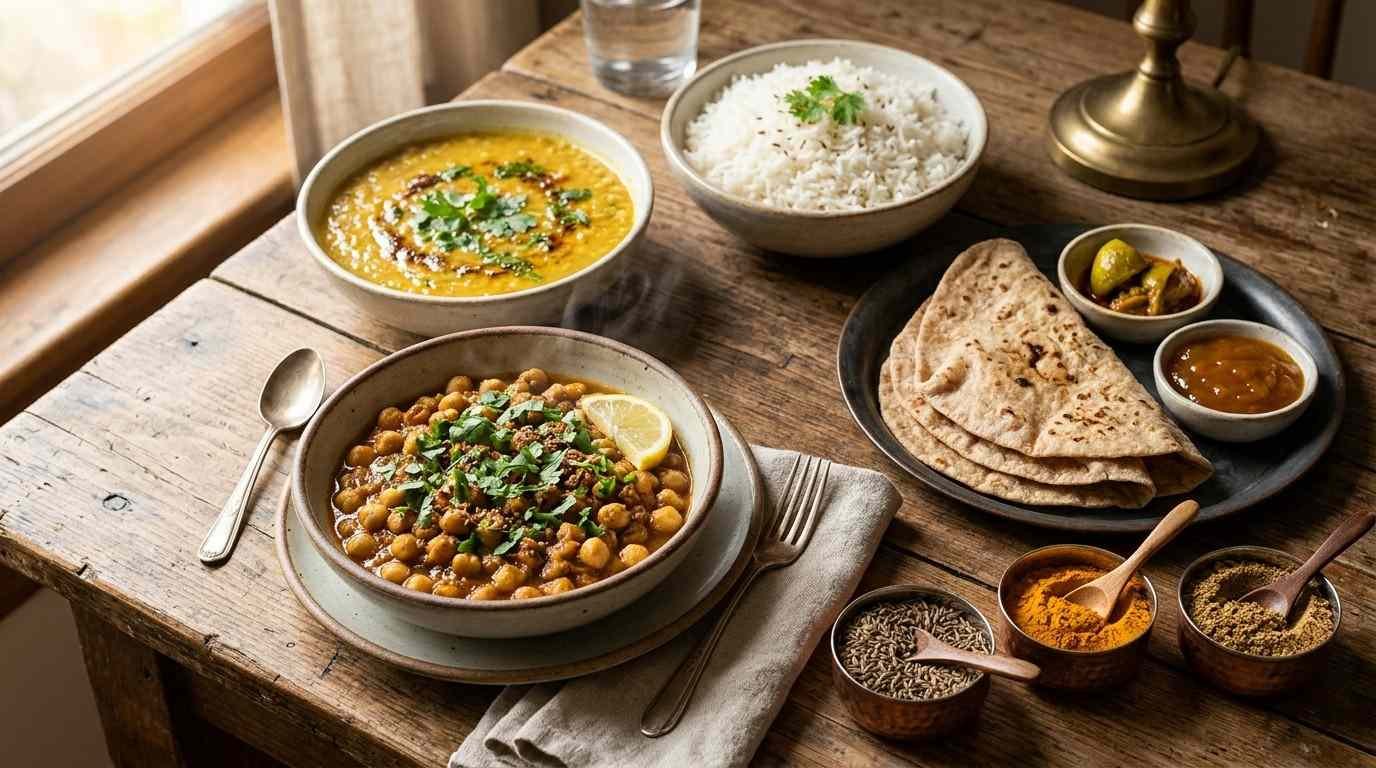
Vegan Indian food is one of the easiest plant-based cuisines to love. Lentils, chickpeas, beans, vegetables, rice, and bold spices already sit at the heart of everyday Indian cooking. Pew Research Center’s 2021 survey found that about 39% of Indian adults describe themselves as vegetarian, so meatless cooking has deep roots there.
There is one catch. Many vegetarian Indian dishes use ghee, cream, yogurt, or paneer. That means “vegetarian” does not always mean “vegan.” This guide shows which dishes are safe, which need small changes, and how to order or cook with confidence.
Quick answer: Vegan Indian food includes dishes made without meat, dairy, eggs, or honey. Naturally vegan favorites include chana masala, dal tadka (made with oil), aloo gobi, baingan bharta, bhindi masala, and plain rice with roti. Always ask whether ghee, butter, cream, or yogurt is used.
Why Indian Cuisine Works So Well for Vegans
Indian cooking builds flavor with spices, not animal products. Cumin, coriander, turmeric, mustard seed, asafoetida (hing), and garam masala do most of the work. Plant proteins such as dal, rajma, and chana appear at almost every meal.
Spices and aromatics that carry the flavor
- Tadka (tempering): spices bloomed in hot oil, poured over dal or vegetables.
- Onion-tomato masala: the base of many curries.
- Coconut and cashew: creamy, dairy-free thickeners, especially in South and coastal dishes.
- Tamarind and amchur: sour notes that make vegetable dishes taste layered.
Vegan vs. vegetarian vs. Jain food
Vegetarian Indian food usually includes dairy. Vegan food removes all animal products. Jain food skips meat, eggs, and often root vegetables such as onion and potato. A Jain dish can be vegan, but a vegan dish is not always Jain.
Best Vegan Indian Dishes to Try
These dishes are popular on menus and simple to veganize. The table shows which are vegan by default and which need a quick request.
| Dish | What It Is | Vegan? | Ask or Swap |
|---|---|---|---|
| Chana masala | Spiced chickpea curry | Usually yes | Confirm no butter |
| Dal tadka | Tempered yellow lentils | Often no | Ask for oil instead of ghee |
| Aloo gobi | Potato and cauliflower | Yes | Usually made in oil |
| Baingan bharta | Smoky mashed eggplant | Usually yes | Check for ghee |
| Rajma | Kidney bean curry | Usually yes | Skip cream topping |
| Dosa and sambar | Rice-lentil crepe with stew | Usually yes | Ask for oil, not butter; check chutney |
| Idli | Steamed rice-lentil cakes | Yes | Check ghee on top |
| Samosa | Fried pastry with potato | Often yes | Some doughs use ghee |
| Palak paneer | Spinach with cheese | No | Swap tofu or chickpeas |
| Naan | Leavened flatbread | Often no | Choose roti or chapati |
Everyday favorites
Chana masala
This tangy chickpea curry is the best first order for newcomers. It is filling, high in fiber, and usually vegan.
Dal
Lentil dals range from soft and soupy to thick and rich. Tadka dal is excellent when made with oil. Dal makhani traditionally includes butter and cream, so it needs a vegan version.
Vegetable curries
Aloo gobi, bhindi masala, and mixed vegetable jalfrezi are dry or semi-dry dishes that rely on spices rather than dairy.
South Indian staples
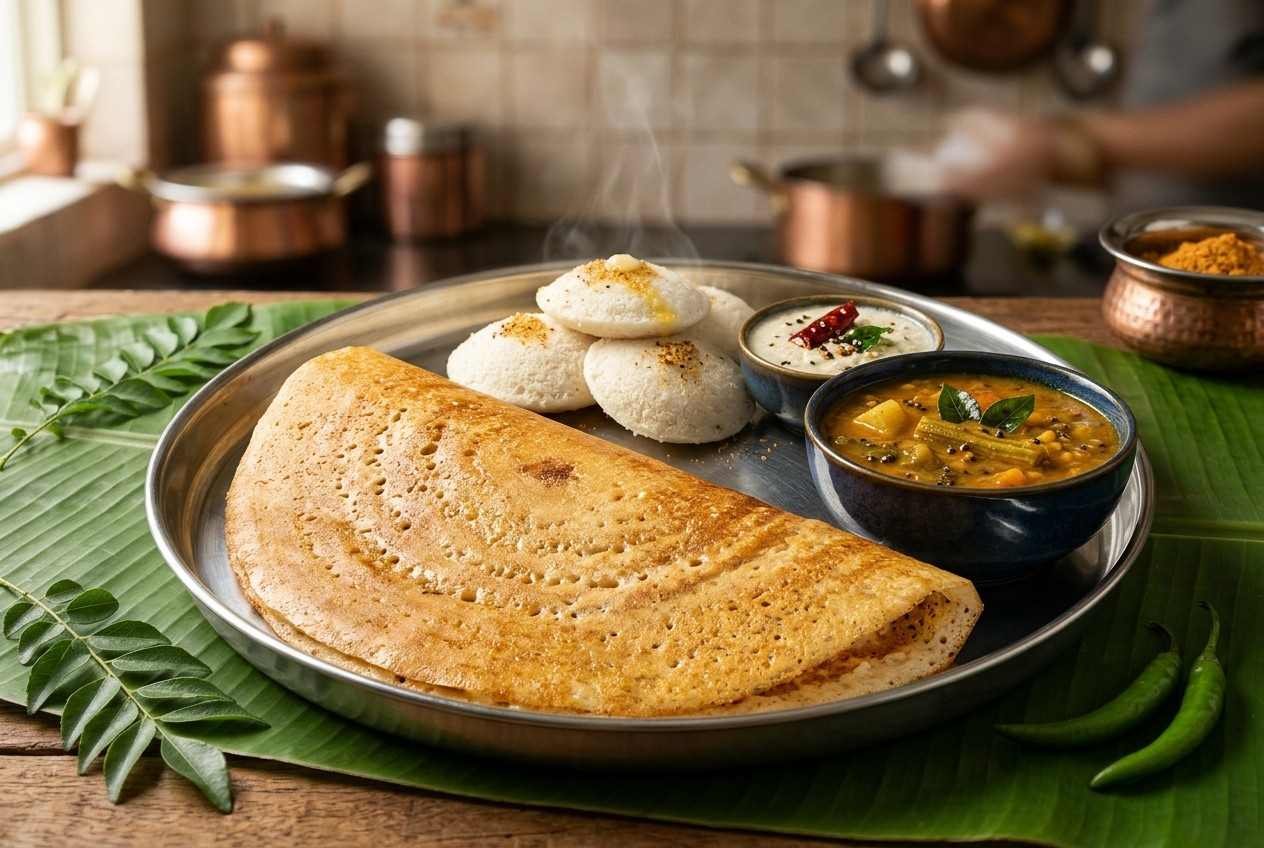
South Indian menus are often friendlier to vegans. Dosa, idli, uttapam, upma, and sambar are built on rice, lentils, and vegetables. Coconut chutney adds creaminess without dairy.
Street food and snacks
- Pani puri and bhel puri: crisp shells with chickpeas, tamarind water, and herbs.
- Pav bhaji: ask for the bhaji to be cooked in oil and the pav (bread) to be unbuttered.
- Vada pav: spiced potato fritter in a bun, often vegan.
Regional Vegan Traditions Across India
- Gujarat and Rajasthan: lentil dishes, millet breads, and vegetable curries, though ghee is common.
- Tamil Nadu and Kerala: coconut-based stews, sambar, rasam, and rice meals served on banana leaf.
- Karnataka and Andhra: dosas, bisi bele bath, and spicy pickles.
- Maharashtra: misal pav, poha, and usal (sprouted beans).
- Punjab: rajma, chole, and sarson ka saag, which often use butter and need swaps.
Pro tip: If a restaurant offers a South Indian or “Udupi” menu, start there. These kitchens often cook in oil and have more naturally vegan options.
How to Find Vegan Indian Food Near You
People searching for vegan Indian food near me usually want fast, reliable answers. These steps help in any city, from Chicago and New York City to Portland and Raleigh.
Step-by-step search method
- Search maps for “Indian restaurant” and filter by “vegan options.”
- Read recent reviews for phrases like “vegan,” “no ghee,” or “dairy-free.”
- Open the online menu and look for a vegan label or allergen guide.
- Call ahead and ask which dishes use ghee, butter, or cream.
- Confirm that vegan dishes are not cooked with shared dairy-based sauces.
Choosing the right kind of spot
- South Indian restaurants: best for dosa, idli, and sambar.
- Buffets: good for sampling, but ask staff about each dish.
- Dedicated vegan Indian kitchens: the safest choice when available.
- Food trucks and fast casual: quick bowls and wraps with chickpeas or lentils.
Vegan Indian food delivery
For vegan Indian food delivery, use the “special instructions” box. Write “Vegan: no ghee, butter, cream, yogurt, or paneer.” Then double-check items such as naan and rice, which may be brushed with butter.
Need food right now? See what is open nearby with our guides to what fast food is open near me and fast food near me at your current location. For budget orders, read cheap food delivery.
Grocery shortcuts
Supermarket frozen aisles carry vegan Indian meals, including some from store brands such as Trader Joe’s. Product lines change, so read the ingredient list for ghee, milk solids, and cream every time.
Easy Vegan Indian Food Recipes at Home
Cooking at home gives full control over ingredients. These easy vegan Indian food recipes need basic pantry items and take about 30 minutes.
Quick chana masala (serves 4)
Ingredients: 2 cans chickpeas, 1 onion, 3 garlic cloves, 1 inch ginger, 1 can crushed tomatoes, 2 tbsp oil, 1 tsp each cumin, coriander, turmeric, 1 tsp garam masala, salt, lemon.
- Heat oil and fry cumin seeds for 30 seconds.
- Add chopped onion and cook until golden, about 8 minutes.
- Stir in garlic, ginger, and ground spices for one minute.
- Add tomatoes and simmer 10 minutes.
- Add drained chickpeas and 1/2 cup water. Simmer 10 minutes more.
- Finish with garam masala, lemon juice, and fresh cilantro.
Simple vegan dal tadka
Rinse 1 cup red lentils and simmer with 3 cups water and turmeric until soft. For the tadka, heat 2 tbsp oil, add cumin, garlic, dried red chili, and hing. Pour it over the dal and serve with rice.
Practical kitchen tips
- Toast whole spices briefly before grinding for stronger flavor.
- Use coconut milk or blended soaked cashews instead of cream.
- Press and pan-fry tofu cubes as a paneer substitute.
- Batch-cook dal and curries. They taste better the next day and freeze well.
- Serve with rice, roti, or a salad of cucumber, tomato, and lemon.
Hosting a gathering? Pair these dishes with ideas from Christmas party food ideas, or plan a bigger menu with fast food catering options.
Restaurant vs. Home Cooking vs. Delivery
| Factor | Restaurant | Home Cooking | Delivery |
|---|---|---|---|
| Vegan certainty | Medium (ask staff) | High | Medium to low |
| Cost | $$ to $$$ | $ | $$ plus fees |
| Variety | High | Depends on skill | Medium |
| Speed | Moderate | 20 to 45 minutes | 30 to 60 minutes |
| Best for | Trying new dishes | Meal prep, budgets | Busy nights |
Nutrition: Is Vegan Indian Food Healthy?
It can be very nutritious. Legumes supply protein and fiber. According to USDA data, a cup of cooked chickpeas has roughly 14 to 15 grams of protein, and a cup of cooked lentils has about 18 grams.
Nutrients to keep an eye on
- Vitamin B12: not reliably found in plant foods, so vegans need fortified foods or a supplement.
- Iron: pair lentils and spinach with vitamin C foods like lemon or tomato to improve absorption.
- Sodium and oil: restaurant curries can be heavy. See our tips on low sodium fast food options.
- Gluten: roti and naan contain wheat. Rice, dosa, and idli are better picks. See gluten-free fast food options.
Balanced plate: Half vegetables, a quarter dal or beans, a quarter rice or roti. Add a small serving of fermented or fresh sides for variety.
This article is general information, not medical advice. Consult a registered dietitian for personal needs.
Explore more cuisines
Love bold flavors? Compare spice profiles in Syrian food, Mexican fast food, and Bosnian food, or see Lunar New Year food for festival menus.
Frequently Asked Questions About Vegan Indian Food
1. Is Indian food vegan-friendly?
Yes, much of it is. Lentil, bean, and vegetable dishes are plant-based by nature. The main risks are ghee, cream, yogurt, and paneer, so always confirm.
2. What are the most popular vegan Indian dishes?
Chana masala, dal, aloo gobi, baingan bharta, bhindi masala, dosa with sambar, and vegetable biryani (made without yogurt) are common favorites.
3. Is naan vegan?
Often not. Many naan recipes use yogurt or milk, and it is usually brushed with butter. Roti or chapati is typically a safer choice.
4. Is paneer vegan?
No. Paneer is a fresh dairy cheese. Tofu, chickpeas, or soy chunks work well in paneer-style dishes.
5. How can I find the best vegan Indian food near me?
Use map filters, check recent reviews for “vegan” or “no ghee,” read the online menu, and call the restaurant. South Indian and dedicated vegan kitchens are good places to start.
Conclusion: Enjoy Vegan Indian Food With Confidence
Vegan Indian food is flavorful, filling, and easy to enjoy once you know what to look for. Start with naturally plant-based dishes like chana masala, aloo gobi, and dosa. Watch for ghee, paneer, cream, and yogurt. Use clear ordering language, and try home recipes when you want full control.
Whether searching for vegan Indian food near me, ordering delivery, or cooking dinner, a few small questions make every meal better. Bookmark this guide and explore more food ideas on our blog.