Elephant Ears Food: What It Is, How to Make It, and Where to Find It
Crisp edges, soft chewy centers, and a snowfall of cinnamon sugar. This guide covers everything about elephant ears food, from its fairground roots to an easy homemade recipe.
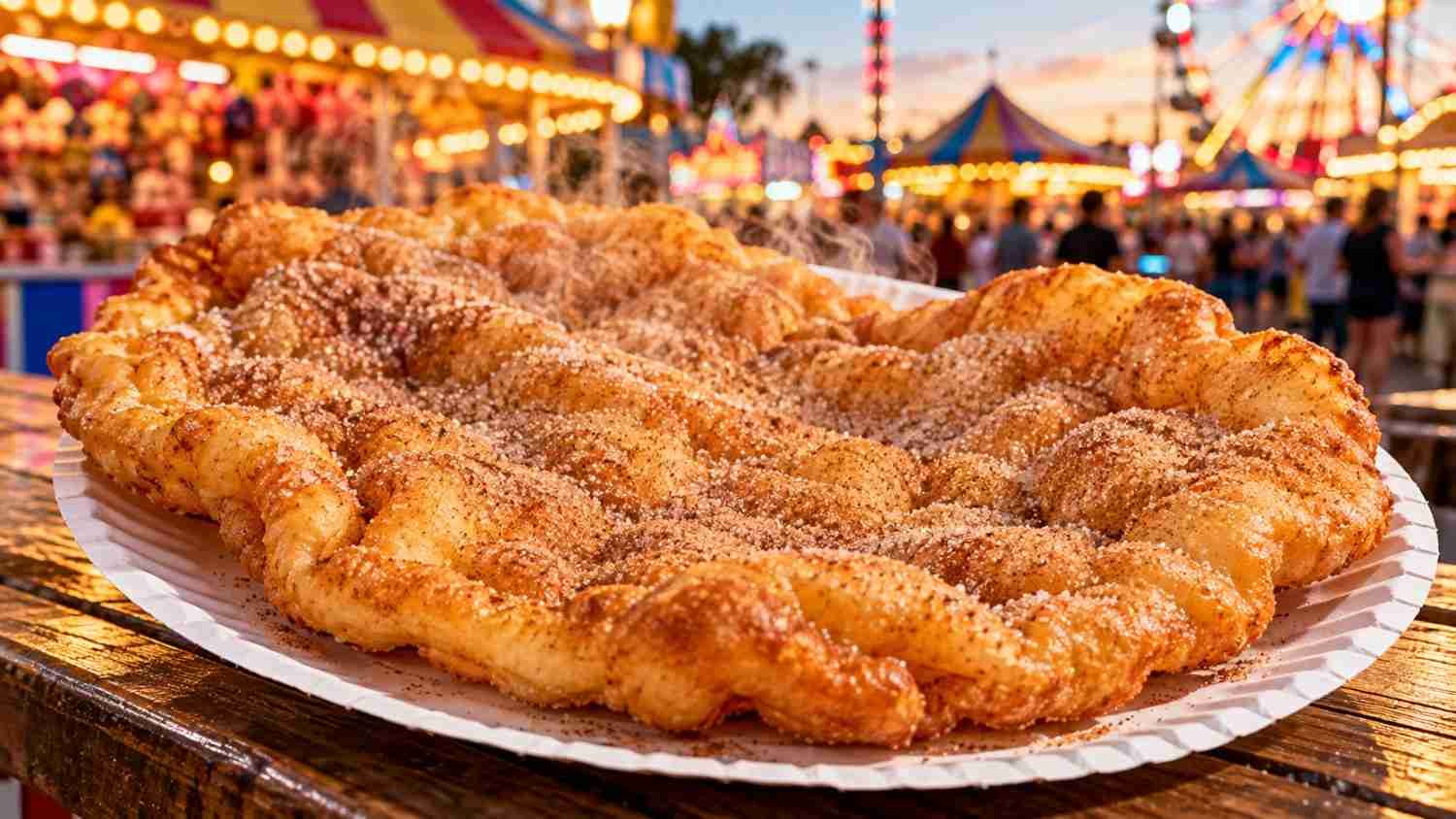
Elephant ears food is a large, flat, round piece of fried dough, stretched thin until it is roughly the size of an elephant’s ear. It is fried until golden and bubbly, then topped with cinnamon sugar, powdered sugar, fruit, or chocolate. It is a classic at state fairs, carnivals, and food trucks across North America.
What Is Elephant Ears Food?
Elephant ears food is one of the most recognizable fair treats in the United States. A ball of yeast dough is pulled and flattened into a wide disc, then dropped into hot oil. The center stays soft and chewy. The edges turn crisp and blistered. Once it comes out of the fryer, it gets a shower of sugar and cinnamon.
The name comes from the shape. A properly stretched piece can hang over the edges of a paper plate, which is exactly how it earned its nickname.
Main Characteristics
- Dough type: usually a yeast dough, though quick versions use baking powder.
- Shape: a flat, irregular round, thin in the middle and thicker at the rim.
- Cooking method: deep-fried in neutral oil until golden.
- Texture: crunchy edges with a soft, pillowy center.
- Flavor: mildly sweet dough that carries whatever topping is added.
Is It the Same as the Plant?
No. “Elephant ear” is also the common name of a tropical plant with huge leaves, mainly Colocasia and related species. That is a garden plant and has nothing to do with the pastry. Anyone searching for elephant ears food is almost always looking for the fried dough dessert.
Origin and Other Names for Elephant Ears Food
No single inventor is reliably credited with elephant ears. Food historians generally place the treat in the family of fried flatbreads that exist in nearly every cuisine. In the United States, it became tied to fairs and carnivals during the 20th century, when vendors needed a cheap, fast, crowd-pleasing item that could be made in a single pot of oil.
Because it spread informally from stand to stand, the name changes by region.
| Name | Where it is common | Notes |
|---|---|---|
| Elephant ears | Midwest, South, and many U.S. state fairs | The most common name at fairs and carnivals. |
| Fried dough | New England and parts of the Northeast | Often sold as a plain round with sugar or pizza-style toppings. |
| BeaverTails | Canada | A branded, oval-shaped version of the same idea, started in Ottawa in 1978. |
| Fry bread | Native American communities | Related technique, but a distinct food with its own cultural history. |
| Scones (fried) | Utah and nearby areas | Fried bread served with honey butter, not the baked British scone. |
Elephant Ears Food vs Funnel Cake
Both are fried, both are sugary, and both appear at the same booths. They are still different foods. The difference starts with the dough.
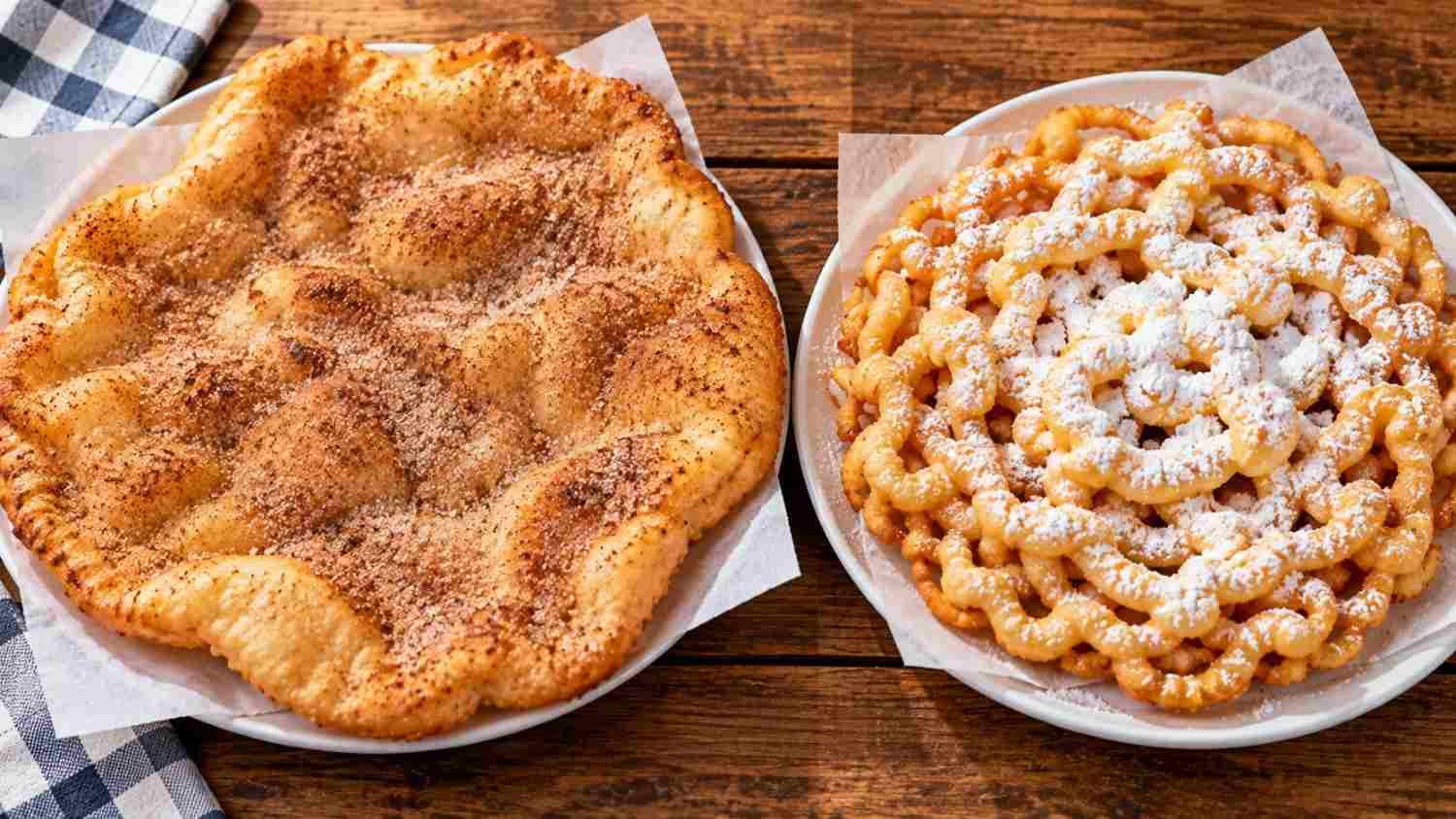
Funnel cake uses a thin batter that is poured through a funnel into hot oil in a swirling, lacy pattern. Elephant ears use a true dough that is kneaded, rested, and stretched by hand. That one change affects texture, thickness, and how well each holds toppings.
| Feature | Elephant Ears | Funnel Cake |
|---|---|---|
| Base | Yeast or baking powder dough | Pourable pancake-style batter |
| Shape | Wide, flat disc | Lacy, tangled swirls |
| Texture | Chewy center, crisp edge | Crisp, airy, slightly greasy |
| Best toppings | Cinnamon sugar, butter, fruit, chocolate | Powdered sugar, fruit, whipped cream |
| Prep skill | Needs rise time and hand stretching | Needs a steady pouring hand |
| Eating style | Torn or folded like a flatbread | Pulled apart in strands |
In short: elephant ears are closer to a sweet flatbread, while funnel cake is closer to a fried pancake.
Why Elephant Ears Dominate State Fairs and Carnivals
Fair vendors choose menu items based on speed, cost, and crowd appeal. Elephant ears check all three boxes.
Fast service
A single piece fries in about two minutes, so lines move quickly even on busy weekend nights.
Low ingredient cost
Flour, yeast, sugar, and oil are inexpensive. That keeps margins healthy for vendors.
Easy to share
The large size encourages groups to tear off pieces, which makes it a social food.
Endless variety
One base dough supports sweet and savory toppings, so a single booth can serve many tastes.
Stands are also visually effective. A vendor stretching dough in plain sight and lifting a golden disc out of the fryer is its own advertisement.
How Big Is a Fair-Style Elephant Ear?
Sizes vary by vendor, but most fair portions are about the size of a dinner plate or larger. Nutrition numbers are rarely published by stands. As a general estimate, a large fair serving with sugar topping commonly lands in the several-hundred-calorie range, and heavily topped versions can climb well past that. Sharing is the practical approach.
Easy Elephant Ears Food Recipe (Fair-Style at Home)
Home cooks can make a very close version of the fair classic with basic pantry staples. This recipe uses a yeast dough for the best chew and flavor.

Ingredients
For the dough
- 3 cups (about 375 g) all-purpose flour, plus extra for dusting
- 2¼ teaspoons (1 packet) instant or active dry yeast
- 2 tablespoons granulated sugar
- 1 teaspoon fine salt
- 1 cup warm milk (about 105–110°F / 40–43°C)
- 2 tablespoons melted butter
For frying and topping
- Neutral oil with a high smoke point (canola, peanut, or vegetable), about 2 inches deep
- ½ cup granulated sugar mixed with 1 tablespoon ground cinnamon
- Optional: powdered sugar, melted butter, or fruit
Instructions
- Mix the dough. Combine flour, yeast, sugar, and salt. Add warm milk and melted butter, then stir until a shaggy dough forms.
- Knead. Knead for 5 to 7 minutes until smooth and slightly tacky.
- Let it rise. Cover and rest in a warm spot for about 1 hour, until nearly doubled.
- Divide. Cut the dough into 8 equal pieces and rest them for 10 minutes. This relaxes the gluten and makes stretching easier.
- Stretch. Pull and flatten each piece by hand into a 6 to 8 inch round. Keep the center thinner than the edge. A small hole in the middle is fine.
- Heat the oil. Bring oil to 350–360°F (175–182°C). Use a thermometer for consistent results.
- Fry. Fry one piece at a time for 45 to 60 seconds per side, until deep golden.
- Drain and top. Move to a wire rack or paper towels, then coat right away with cinnamon sugar while still warm.
- Oil that is too cool makes greasy dough. Oil that is too hot browns the outside before the center cooks.
- Do not crowd the pan. Frying one at a time keeps the temperature steady.
- Top while hot. Sugar sticks best to a freshly fried surface.
- Eat fresh. Elephant ears are best within 15 to 20 minutes of frying.
Quick Version Without Yeast
For a faster option, mix 2 cups flour, 2 teaspoons baking powder, ½ teaspoon salt, 1 tablespoon sugar, and about ¾ cup milk with 1 tablespoon oil. Knead briefly, rest 15 minutes, then stretch and fry the same way. The result is slightly denser but still tasty.
Elephant Ears Food Topping Ideas
Cinnamon sugar is the classic, but the flat surface works like a canvas. Here are popular options, grouped by style.
Classic Sweet Toppings
- Cinnamon sugar with a brush of melted butter
- Powdered sugar
- Honey and a pinch of salt
Fruit and Dessert Toppings
- Strawberries with whipped cream
- Apple pie filling and caramel
- Chocolate or hazelnut spread with sliced banana
- Vanilla ice cream, served warm-and-cold
Savory Twist
- Pizza style: marinara, mozzarella, and Italian herbs (common as “fried dough” in the Northeast)
- Garlic butter and grated parmesan
- Taco-style with seasoned beef, lettuce, and cheese, as found on some food trucks
Where to Get Elephant Ears Food Near You
Elephant ears food is seasonal in many places, so availability depends on events and vendors. Here are the most reliable places to look.
| Where to look | Best time | What to expect |
|---|---|---|
| State and county fairs | Late summer and early fall | Large portions, many topping choices, long lines at peak hours. |
| Carnivals and festivals | Spring through fall | Classic cinnamon sugar and powdered sugar versions. |
| Food trucks | Year-round in many areas | Creative flavors; check the truck’s social page for schedules. |
| Farmers markets | Weekends | Smaller portions, often with local fruit. |
| Amusement parks and boardwalks | Open season | Reliable stands, usually at set locations. |
How to Find a Nearby Vendor
- Search maps for “elephant ears near me,” “fried dough near me,” or “elephant ears food truck near me.”
- Check the official website or social page of local fairs and festivals for vendor lists.
- Follow regional food truck groups, which usually post daily locations.
- Call ahead. Seasonal stands may change hours or close during bad weather.
Similar Fried Dough Treats Around the World
Fried dough is a global comfort food. Elephant ears belong to a long list of cousins, and exploring them is a fun way to learn about different food cultures.
- Zeppole and pizza fritte (Italy): puffy fried dough, often sugared. Readers curious about this tradition can browse Italian food.
- Loukoumades (Greece): small fried dough balls with honey. More ideas appear in the Greek food section.
- Malasadas (Portugal and Hawaii): sugar-coated fried dough that became an island favorite. See Hawaiian food.
- Churros and buñuelos (Spain and Latin America): fried dough with cinnamon sugar. For language and menu help, try food in Spanish.
- Chrusciki (Poland): crisp, powdered fried pastry ribbons. Explore Polish food.
- Fry bread (Native American cuisine): a culturally significant fried bread with a distinct history from fair elephant ears.
For more comfort food inspiration, readers can also visit soul food, Cuban food, Jamaican food, and Lebanese food. Cooks who want to turn the recipe above into a full menu can find more ideas in the food recipes collection, and dipping-sauce fans may like Costco fast food sauces. For fresher, lighter options, there is also a guide to True Food Kitchen.
Expert Tips for Enjoying Elephant Ears Food
- Go early or late. Midday fair lines are longest, and fresh-from-the-fryer pieces are best when the oil is clean.
- Watch the fryer. A golden, bubbly piece in motion is a good sign. Pale, limp dough suggests oil that is not hot enough.
- Share one. The portion is large enough for two or three people.
- Bring napkins. Sugar and oil go everywhere.
- Ask about allergens. The dough usually contains wheat and milk. Cross-contact with other fried foods is possible.
Frequently Asked Questions About Elephant Ears Food
What are elephant ears food made of?
Elephant ears food is made from a simple dough of flour, yeast (or baking powder), sugar, salt, milk, and butter or oil. The dough is stretched thin, deep-fried, and topped with cinnamon sugar or other sweet toppings.
Is elephant ears food the same as funnel cake?
No. Elephant ears use a kneaded dough that is stretched into a flat disc, while funnel cake uses a pourable batter drizzled into hot oil in a lacy pattern. Elephant ears are chewier, and funnel cake is airier and crisper.
What is another name for elephant ears food?
Depending on the region, it may be called fried dough, or in Canada, a BeaverTail. Fry bread is a related but separate food with its own cultural history.
Where can I get elephant ears food near me?
Look at state and county fairs, carnivals, festivals, farmers markets, and food trucks. Searching maps for “elephant ears near me” or “fried dough near me” and checking local event pages usually turns up current options.
How do you reheat leftover elephant ears?
Warm them in a 350°F oven or air fryer for 3 to 5 minutes to bring back crispness. A microwave makes them soft and chewy rather than crisp. They are always best fresh.
Conclusion
Elephant ears food is a simple pleasure: yeast dough, hot oil, and a generous coating of cinnamon sugar. It is not the same as funnel cake, it goes by different names across regions, and it can be customized with sweet or savory toppings. Fairgoers can find it at carnivals, festivals, and food trucks, while home cooks can recreate it with pantry staples and a bit of frying care.
Ready to keep exploring? Visit the Fast Food Open blog for more food guides, or head to the Fast Food Open homepage for the latest updates.