Salvadoran Food: 15 Must-Try Traditional Dishes, Drinks & Where to Eat
From hand-patted pupusas to sweet corn tamales, this guide explains what Salvadoran food is, which dishes matter most, and how to find authentic meals near you.
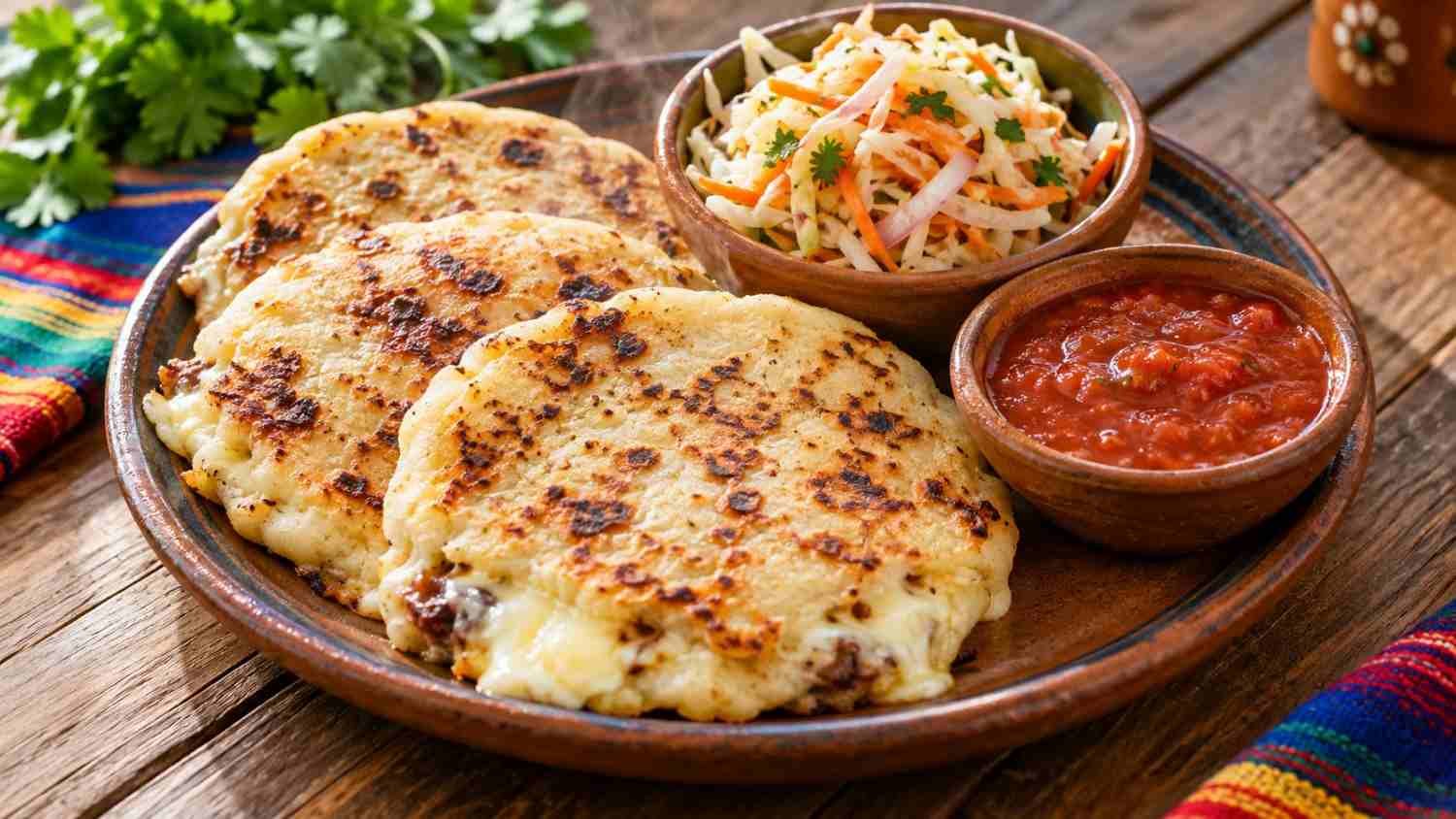
Salvadoran food is comfort cooking built on corn, beans, cheese, pork and fresh herbs. It is simple, filling and affordable, which is why a plate of pupusas can feel like both a quick snack and a family tradition.
This guide covers the most popular Salvadoran food, the names worth remembering, how the dishes differ from other Latin American cuisines, and practical tips for ordering with confidence at a pupusería or food truck.
What Is Salvadoran Food?
Salvadoran food, also written as El Salvadoran food, is the everyday cuisine of El Salvador, the smallest country in Central America. Its roots mix Indigenous Pipil traditions with Spanish influence, and corn remains the backbone of almost every meal.
Core Ingredients
- Corn (maíz): used for masa, tamales, atoles and tortillas.
- Red beans (frijoles rojos): served whole, fried and refried, or stuffed inside pupusas.
- Cheese: fresh quesillo and cured queso duro are common.
- Loroco: an edible flower bud with a mild, earthy flavor, unique to Central American cooking.
- Plantains: fried sweet, often with cream and beans.
- Pork, chicken and seafood: slow-cooked, grilled or simmered in soups.
Flavor Profile
The cuisine is mild rather than fiery. Seasoning leans on garlic, onion, tomato, bell pepper, oregano, cilantro and achiote. Heat usually comes from a table sauce or pickled chili that diners add themselves.
Why It Matters Beyond El Salvador
Roughly 2.4 million people of Salvadoran origin live in the United States, according to U.S. Census Bureau estimates. Large communities in Los Angeles, the Washington, D.C. area, Houston and Long Island have made pupuserías a familiar sight in many American neighborhoods.
Pupusas: The National Dish of El Salvador
Ask anyone for the most famous Salvadoran food and the answer is almost always pupusas. El Salvador’s legislature officially recognized the pupusa as the national dish in 2005 and set aside the second Sunday of November as National Pupusa Day (Día Nacional de la Pupusa). In 2026, that falls on November 8.
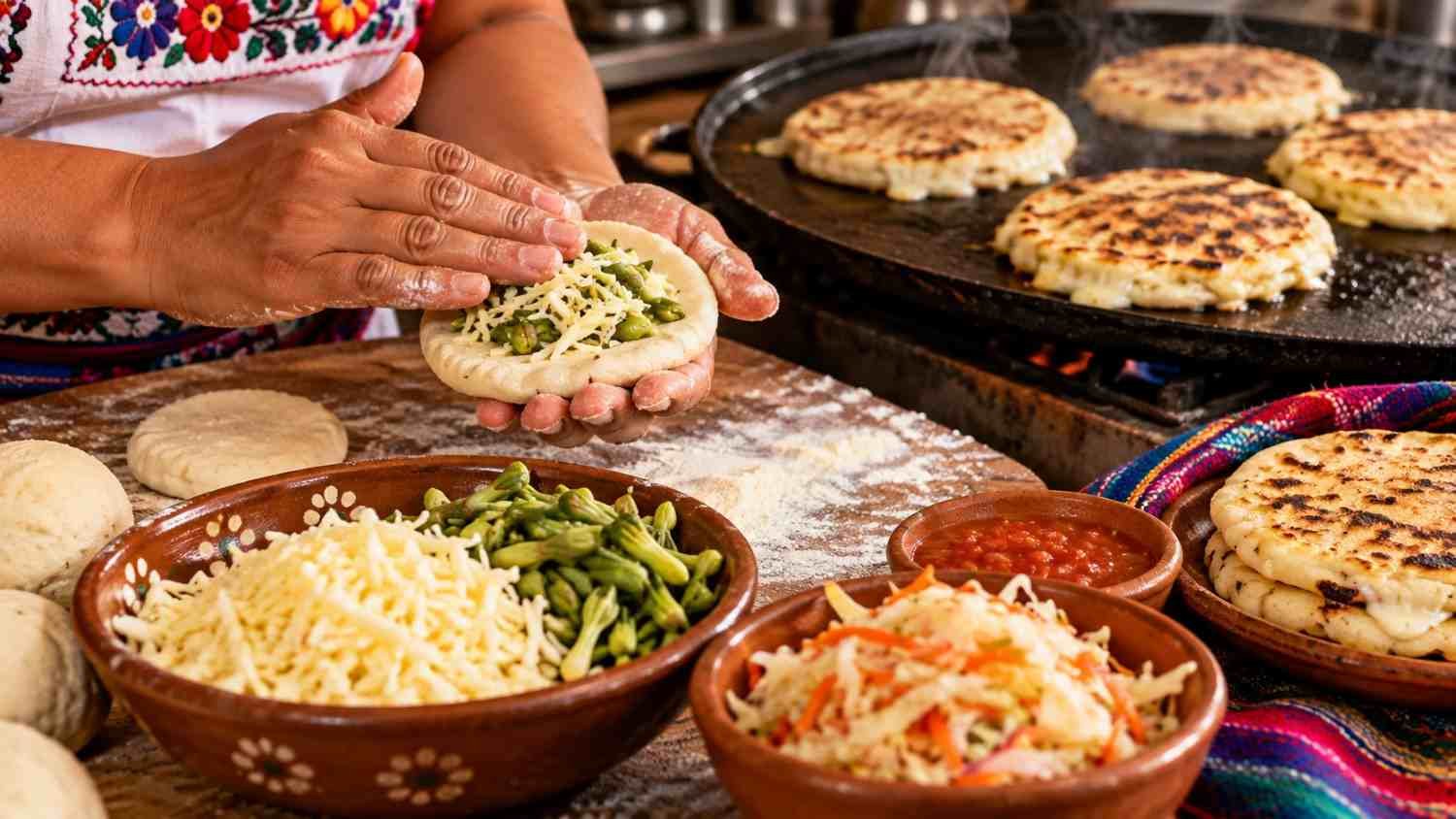
How a Pupusa Is Made
- Cooks mix masa harina (or fresh masa) with water into a soft dough.
- A ball of dough is flattened in the palm and filled.
- The edges are sealed, and the ball is patted into a thick disc.
- It cooks on a hot griddle (comal) until golden with a few toasted spots.
Popular Pupusa Fillings
| Pupusa Type | What’s Inside | Best For |
|---|---|---|
| Revuelta | Pork (chicharrón), beans and cheese | First-timers wanting the classic |
| Queso con loroco | Cheese with loroco flower buds | Vegetarians, fans of unique flavors |
| Frijol con queso | Refried beans and cheese | Budget-friendly, kid-friendly |
| Queso | Melted cheese only | Simple, mild eaters |
| Chicharrón | Seasoned ground pork | Meat lovers |
| Ayote / Espinaca | Squash or spinach with cheese | Lighter, veggie-forward option |
Curtido and Salsa Roja
Curtido is lightly fermented cabbage slaw with carrot, onion, oregano and vinegar. Salsa roja is a mild blended tomato sauce. Together they are as important as the pupusa itself.
Traditional Salvadoran Food List: 15 Dishes to Know
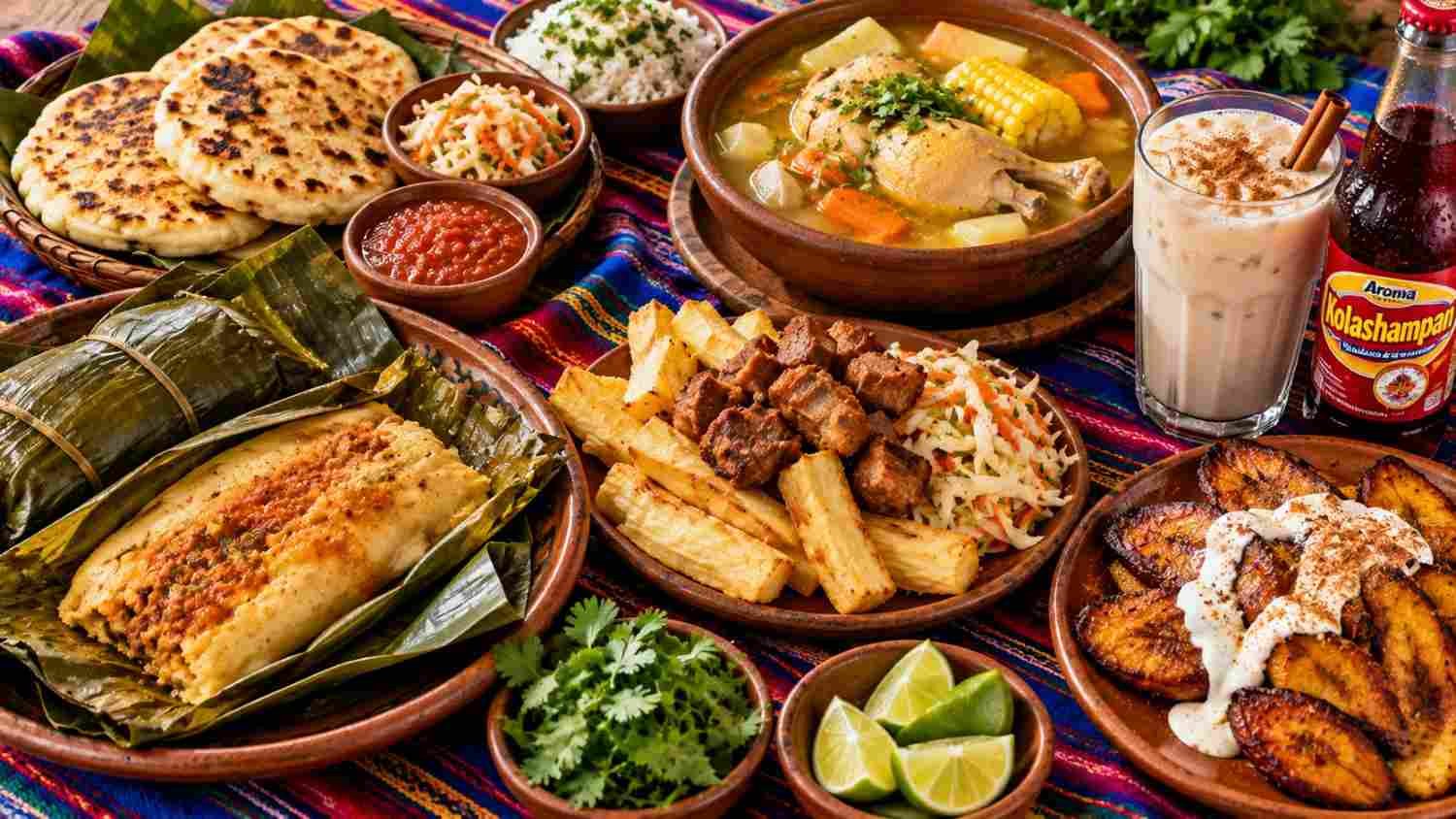
If you are searching for Salvadoran food names, this list covers the dishes most often found on menus and at family tables. They are grouped by meal type for easy scanning.
Main Dishes and Street Food
1. Pupusas
Stuffed corn griddle cakes. The undisputed star of Salvadoran food.
2. Yuca frita con chicharrón
Crispy fried cassava with fried pork and curtido. A popular street snack.
3. Pan con pollo
A warm chicken sandwich on crusty bread with cucumber, watercress, radish and a savory sauce. Not the same as a deli sandwich.
4. Pastelitos
Fried turnovers filled with seasoned meat or vegetables.
5. Panes rellenos
Stuffed turkey or chicken sandwiches in a rich tomato-based sauce, often served during holidays.
6. Casamiento
Rice and red beans cooked or fried together. A staple side dish.
Tamales and Corn Specialties
7. Tamales de pollo
Masa filled with chicken, potato and vegetables, steamed in banana leaves.
8. Tamales de elote
Sweet fresh-corn tamales, usually eaten with sour cream.
9. Riguas
Fresh-corn cakes cooked on a griddle, often served with cream or cheese.
Soups and Seafood
10. Sopa de pata
A hearty soup made with beef feet, tripe, corn, yuca and plantain.
11. Sopa de gallina
Slow-simmered hen soup with vegetables. Often served on weekends and family gatherings.
12. Mariscada
Creamy seafood soup with shrimp, fish and shellfish, popular along the coast. Seafood fans may also enjoy our fish food guide.
Breakfast Favorites
13. Desayuno típico
Scrambled eggs, refried beans, fried plantains, fresh cheese and cream with warm tortillas.
14. Plátanos fritos con crema
Sweet fried plantains topped with cream and beans.
15. Empanadas de plátano
Mashed plantain pockets filled with sweet milk custard and fried.
Salvadoran Drinks and Desserts
A meal of Salvadoran food is rarely complete without a traditional drink or a sweet finish.
| Item | Type | Description |
|---|---|---|
| Horchata de morro | Drink | Creamy, lightly spiced drink made from ground morro seeds, rice and cinnamon. It differs from Mexican rice horchata. |
| Kolashampan | Drink | Sweet, fruity cane-sugar soda that is a national favorite. |
| Atol de elote | Drink | Warm, thick sweet-corn drink with cinnamon. |
| Atol shuco | Drink | Savory fermented corn drink with black beans, served hot. |
| Salvadoran coffee | Drink | Mild, balanced coffee, grown in the country’s volcanic highlands. |
| Quesadilla salvadoreña | Dessert | A sweet, dense cheese cake, nothing like the Mexican folded tortilla. |
| Nuégados | Dessert | Fried yuca fritters drizzled with sugarcane syrup. |
| Minutas | Dessert | Shaved ice with fruit syrup, ideal on a hot day. |
Salvadoran Food vs. Mexican Food: Key Differences
Many first-time diners assume the two cuisines are the same. They share corn and beans, but the flavors and signature dishes are quite different.
| Feature | Salvadoran Food | Mexican Food |
|---|---|---|
| Signature dish | Pupusa | Taco |
| Heat level | Mild, with optional sauces | Often spicier, with many chili varieties |
| Tortilla style | Thick, stuffed and griddled | Thin, folded or rolled |
| Signature side | Curtido (fermented slaw) | Pico de gallo, salsa verde |
| Unique ingredient | Loroco | Wide chili range, nopales |
| Tamale wrap | Banana leaves | Corn husks (most regions) |
Curious about other regional cuisines? Explore our guides to Cuban food, Jamaican food and Hawaiian food for more comfort-food comparisons.
Salvadoran Food Near Me: How to Find the Best Spots
Searching for Salvadoran food near me usually turns up a mix of sit-down restaurants, bakeries and food trucks. These steps help you pick a good one.
What to Look For
- Pupusas made to order: fresh pupusas take about 10 minutes. Pre-made stacks rarely taste as good.
- House-made curtido: it should taste tangy and crisp, not soggy.
- Loroco on the menu: a reliable sign of an authentic kitchen.
- Busy lunch crowds: locals often fill the best places, especially on weekends.
- Traditional drinks: horchata de morro and kolashampan are good signals.
Salvadoran Food Trucks
A Salvadoran food truck is often the quickest way to try pupusas, yuca frita and fresh sides on a budget. Check social media for daily locations and hours. Cash is sometimes preferred, so bring a little.
Best Times to Go
Many pupuserías are busiest in the evening and on weekends. Some close early in the afternoon. Before heading out, check hours online or look for places that are open late through our fast food open now listings and the latest posts on the FastFoodOpen blog.
- Start with one revuelta and one queso con loroco to compare.
- Plan on 2 to 3 pupusas per adult for a full meal.
- Ask for extra curtido. It is usually free.
- Pair with horchata de morro or a cold kolashampan.
Halal diners should confirm the pork-free options directly, since chicharrón is common. Our halal food guide offers more help.
Easy Salvadoran Food Recipes to Try at Home
Salvadoran food recipes are friendly for home cooks because they need few ingredients. For more kitchen ideas, browse our food recipes collection.
Simple Cheese Pupusas (Makes About 8)
Ingredients
- 2 cups masa harina
- About 1¼ cups warm water
- 1 cup shredded mozzarella or quesillo
- Pinch of salt and a little oil for the hands and pan
Steps
- Mix masa harina, salt and water until the dough feels like soft clay.
- Rest the dough for 10 minutes, then divide into 8 balls.
- Flatten each ball, add a spoonful of cheese, fold the edges up and seal.
- Pat into a disc about ½ inch thick.
- Cook on a medium-hot oiled skillet for 3 to 4 minutes per side until golden.
Quick Curtido
- Combine 3 cups shredded cabbage, 1 grated carrot and ½ sliced onion.
- Pour over hot water for 1 minute, then drain.
- Mix with ½ cup white vinegar, 1 teaspoon oregano and a pinch of salt.
- Chill at least 2 hours before serving.
Pairing Salvadoran Food With Other Cuisines
Salvadoran flavors pair well with other comfort-driven menus. If you enjoy hearty, slow-cooked dishes, you may also like the guides to soul food, Italian food, Greek food, Lebanese food and Polish food. For a lighter, health-focused alternative, read about True Food Kitchen.
Frequently Asked Questions About Salvadoran Food
What is Salvadoran food known for?
Salvadoran food is best known for pupusas, thick corn tortillas stuffed with cheese, beans or pork. It is also known for tamales, hearty soups, fried plantains, curtido slaw and sweet drinks like horchata de morro.
What is the most popular Salvadoran dish?
The pupusa is the most popular and the official national dish of El Salvador. Revuelta (pork, beans and cheese) and queso con loroco are the two most common choices.
Is Salvadoran food spicy?
Not usually. Most traditional dishes are mild and savory. Heat is typically added at the table with hot sauce or pickled chilies.
Is Salvadoran food healthy?
It can be balanced, since beans, corn, vegetables and soups are central. Fried items, chicharrón and cream add calories, so choose bean or veggie pupusas, extra curtido and baked or soup-based dishes for lighter meals.
What is the difference between Salvadoran and Mexican food?
Salvadoran food is milder and centers on pupusas, curtido and loroco, while Mexican food features tacos, a wider range of chilies and thinner tortillas. Tamales also differ: Salvadoran tamales are commonly wrapped in banana leaves.
Conclusion: Why Salvadoran Food Deserves a Spot on Your Table
Salvadoran food proves that simple ingredients can create unforgettable meals. Pupusas lead the way, but tamales, sopa de gallina, yuca frita, pan con pollo and horchata de morro all deserve attention too.
To get started, order a revuelta and a queso con loroco, load them with curtido, and add a traditional drink. If you prefer cooking at home, the pupusa and curtido recipes above are an easy entry point. Either way, you will taste why this cuisine has built such a loyal following.
Keep exploring more cuisines and food guides on FastFoodOpen and the blog.